Option codes explained
CNC Plasma Machine uses option codes to show exactly what is fitted to a standard-bed machine before it leaves our Germiston build bay. Each code links to a machine part and shows where the choice matters on the floor.
How the code is built
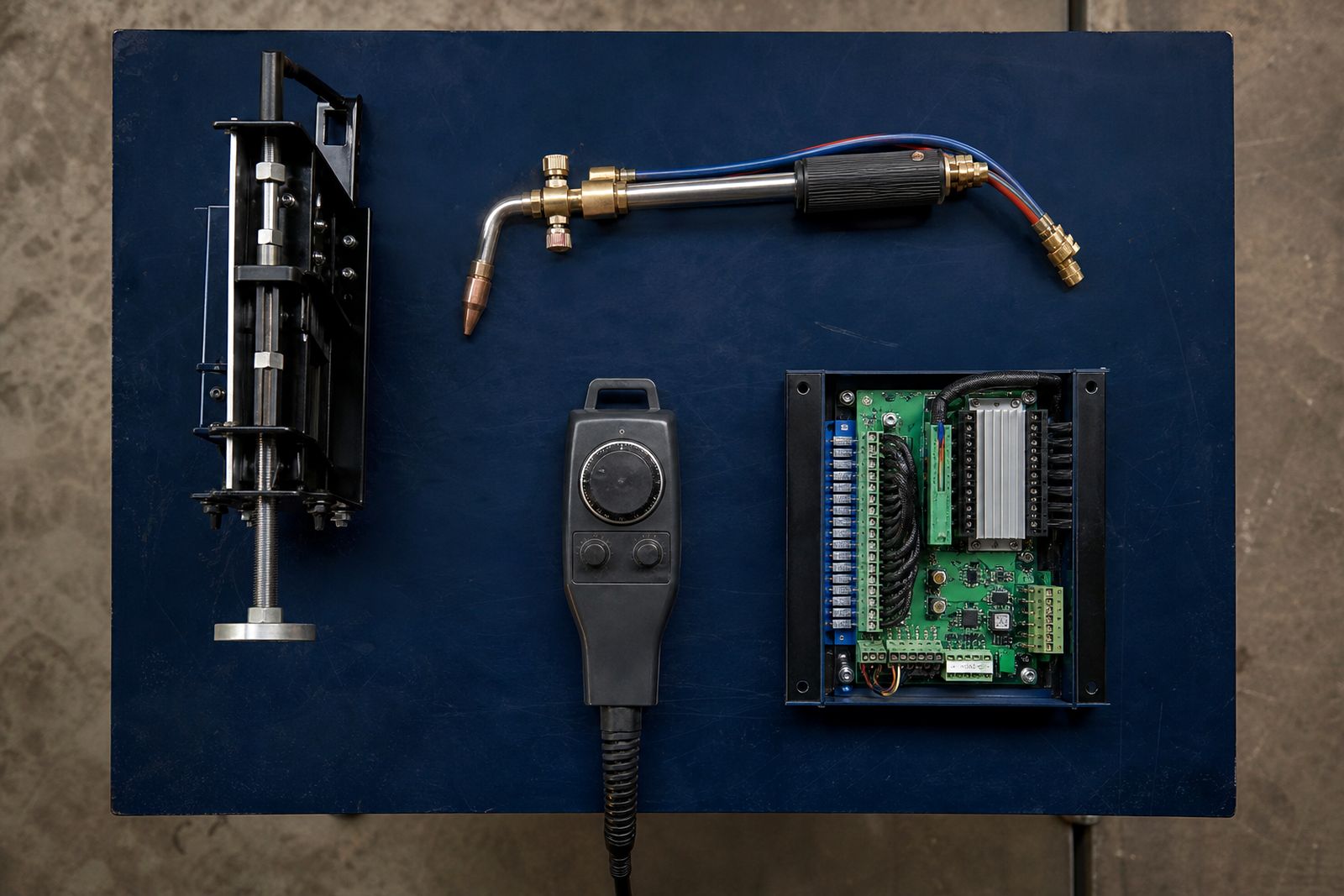
Each machine starts with the bed size, then the option letters add the working parts around it. The code is a practical build note that tells you which height-control method, cutting process, operator hardware and table hardware are going onto the machine.
On this site, each option also has its own page so you can read the detail without mixing it up with bed size. The bed size decides sheet coverage and floor space. The option code decides how the torch is controlled, whether flame cutting is included, how the operator moves the machine, and what is fitted around the slat bed and control system.
- P-THC covers torch-height control.
- P-THC/ARC uses arc-voltage sensing for height control while cutting.
- P-THC/MEC uses a mechanical method for height reference.
- P-FLAME adds an oxy-fuel flame torch.
- P-REMOTE adds a wireless pendant.
- P-DIVIDER adds bed dividers for plate support and sectioning.
- P-BOARD covers the electronic control boards fitted in the machine.
- P-CONTROL covers the operator stand and the control position beside the machine.
Torch-height control first, because it affects every cut
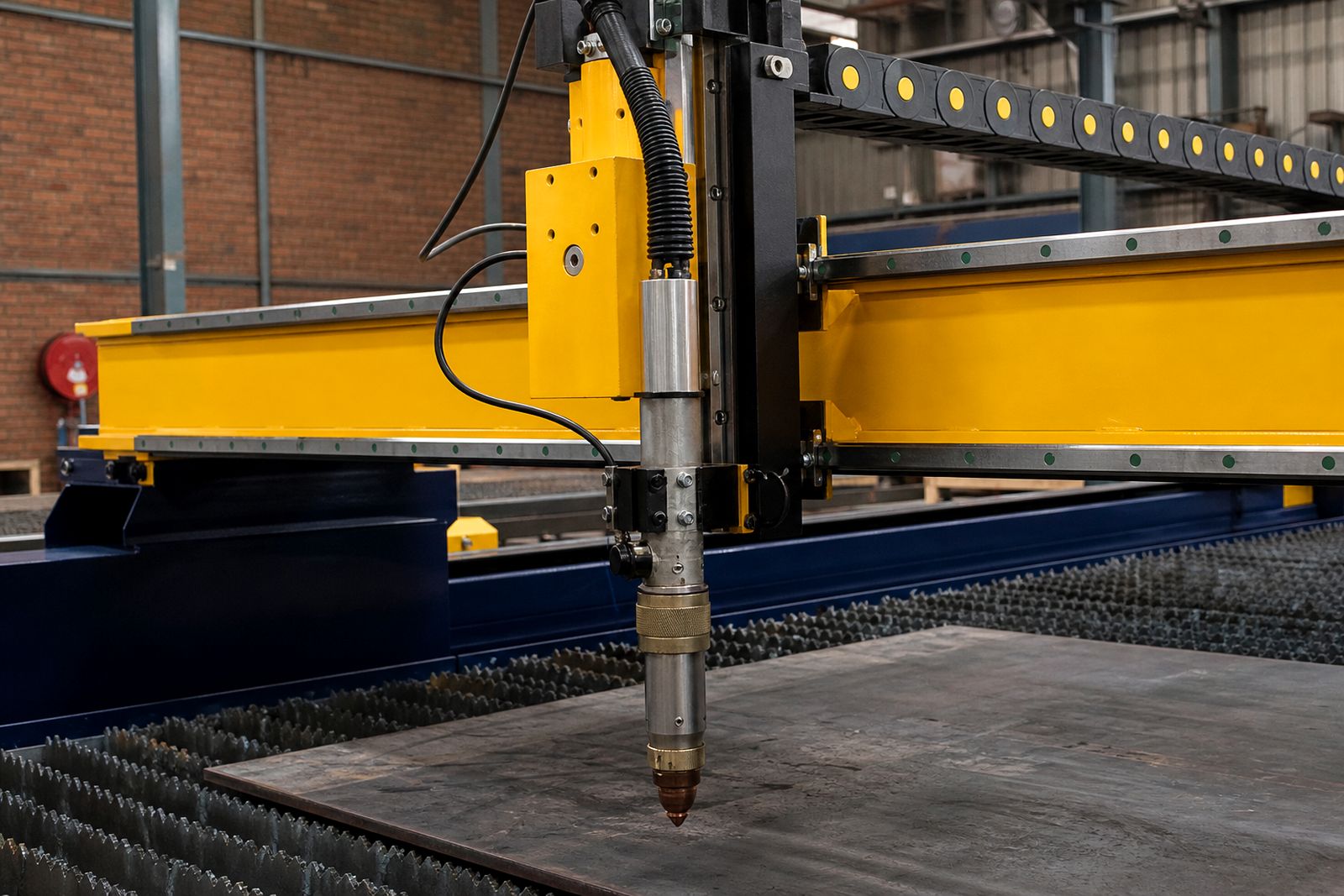
If you are choosing only one option carefully, start with torch-height control. Height control is tied directly to cut quality, consumable wear and how well the machine copes with plate that is not perfectly flat. Thin sheet, light warp and longer cutting runs all expose a poor height choice early in use.
P-THC is the general family. Under that family, the code after the slash shows which method is fitted. ARC and MEC suit different shop habits, different material conditions and different expectations from the operator.
- P-THC/ARC suits work where arc-voltage tracking during the cut helps maintain stand-off on material that moves or varies.
- P-THC/MEC suits shops that want a simpler mechanical reference arrangement for set height.
- Both options are configured onto the machine before commissioning and explained during operator training.
ARC or MEC on a real workshop floor
The practical difference shows up when the plate is not ideal, when jobs change often, or when the operator is trying to keep cut height consistent across a full sheet. ARC is often chosen where more active height correction during cutting is useful. MEC can make sense where the work is straightforward and the operating routine is kept tight.
- Choose ARC if material warp is common, cut consistency across a sheet matters, or mixed jobs move through the machine often.
- Choose MEC if the work is more repetitive, operators want a direct mechanical setup method, or the plate condition is usually predictable.
- If your jobs include both fine plasma work and heavier plate runs, talk through the job mix instead of choosing by price only.
The wrong height-control method is awkward to live with, even if the bed size is correct. This is one area where a short description of your usual material thicknesses helps narrow the choice.
Options that change the machine around the torch
Some codes change how the machine works day to day. P-FLAME adds oxy-fuel capability for work better suited to flame cutting. P-REMOTE adds a wireless pendant so the operator can move and jog the machine from a hand-held control. P-DIVIDER changes the bed layout by splitting support areas in a more controlled way.
These options matter most when a machine is used for more than one pattern of work through the week. A shop cutting only flat mild steel blanks may leave the machine fairly simple. A shop mixing plate profiles, heavier sections and repeated setup changes often wants the extra convenience and flexibility, even on a standard bed.
- P-FLAME is worth discussing when thicker mild steel profiles are part of the workload.
- P-REMOTE helps when operators need to position, inspect or jog from different points around the bed.
- P-DIVIDER helps with support management on the table and can make loading patterns more orderly.
Boards, controls and the operator position
P-BOARD and P-CONTROL are less visible in a sales conversation, but they shape daily use. The boards handle the machine control functions fitted to that build. The operator stand determines where the controls sit and how the operator works beside the machine during setup and cutting.
For smaller shops this matters more than people expect. A machine that is easy to approach, easy to load and easy to run from the operator position causes less frustration over a long shift. In coastal areas such as Durban or Cape Town, it also helps to discuss the working environment so the machine arrives matched to a real floor, not an ideal one.
These details are commissioned on site with the rest of the machine. If there are municipal rules at your premises around gas cylinder storage for flame cutting, raise that at enquiry stage so the floor arrangement can be discussed properly.
Choosing a code set that matches the job mix
The most useful way to specify a machine is to start with the sheet size you cut most often, then add only the options that change production in a meaningful way. That keeps the build clear and avoids paying for features that do not suit your work.
- Start with a 1.3 x 2.5 m bed, 1.5 x 3.0 m bed or 2.0 x 3.0 m bed based on sheet size and available floor space.
- Add P-THC/ARC or P-THC/MEC based on material condition and cutting routine.
- Add P-FLAME only if flame cutting belongs on the same machine.
- Add P-REMOTE if machine movement from around the bed will save time during setup.
- Add P-DIVIDER where bed organisation and support layout matter for the parts you cut.
- Discuss P-BOARD and P-CONTROL as part of the full machine build, not as afterthoughts.
If you already know your preferred bed size, the option pages will narrow the rest. If not, the bed-size page and our contact form are the best place to start, with your common material widths, thickness range and the space available in the shop.
Explore the range
P-THC torch-height control
Height control helps the torch follow real plate movement instead of cutting at one fixed setting.
Read more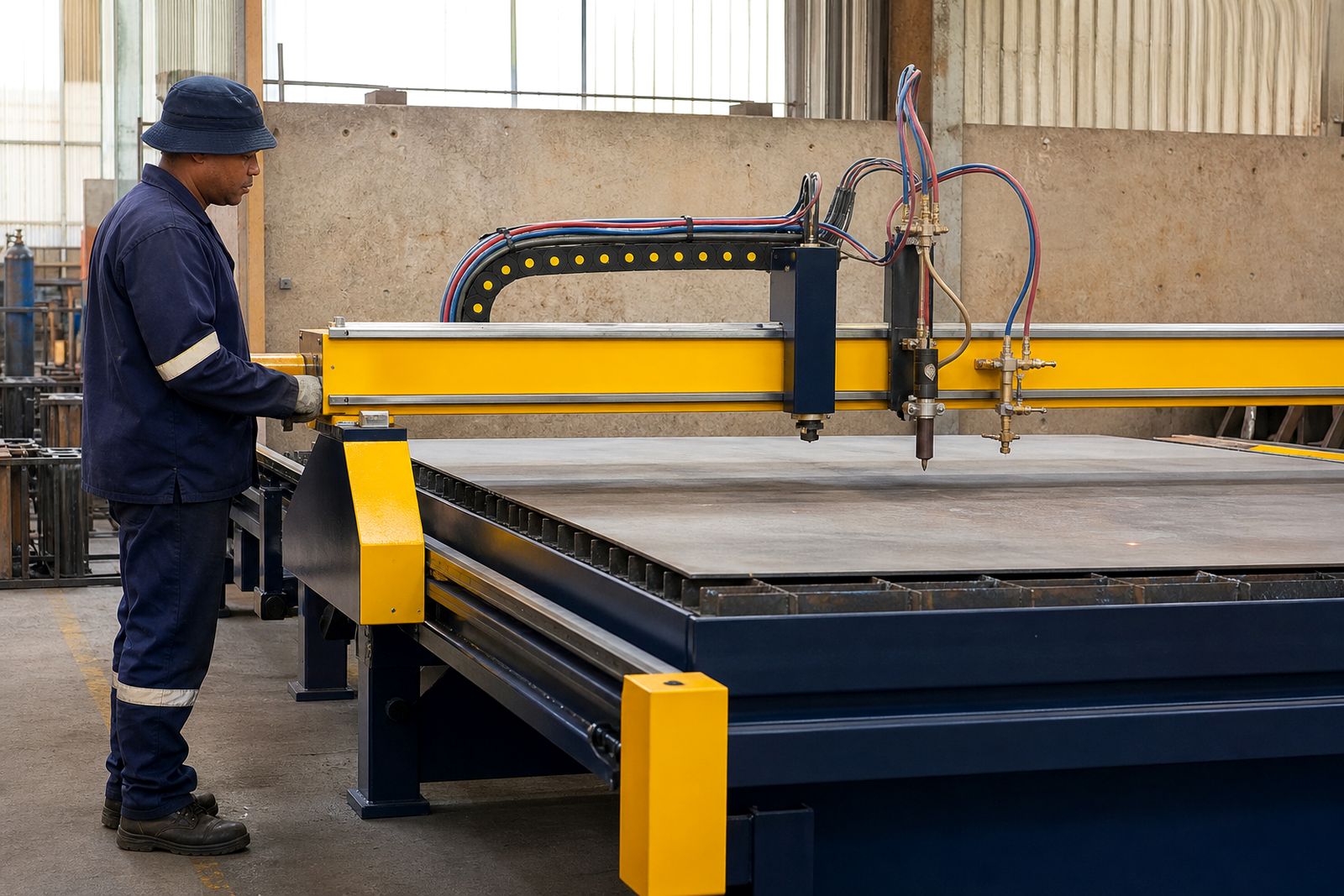
P-FLAME oxy-fuel flame torch
A second torch station for thicker steel plate where plasma starts losing economy and edge quality.
Read more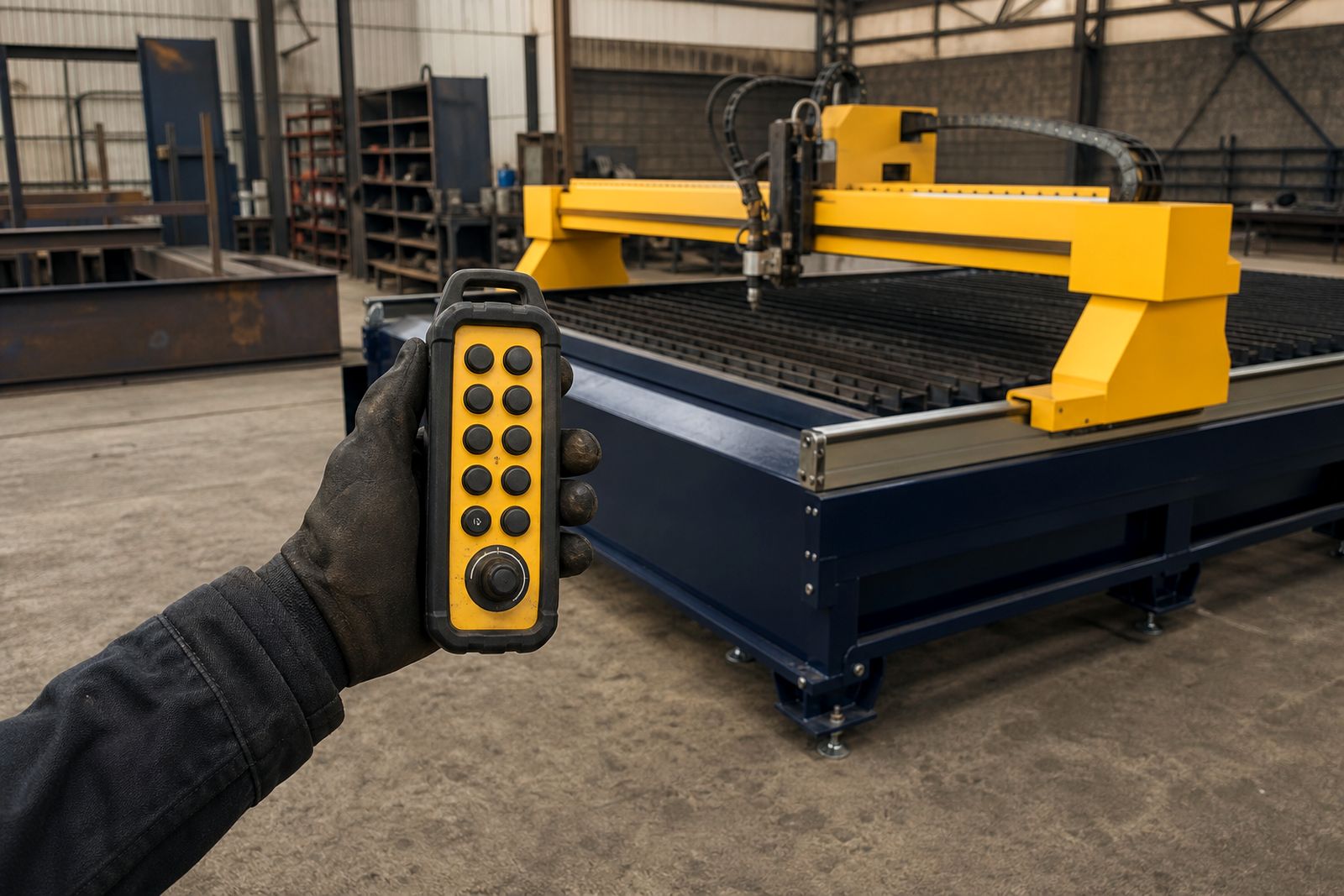
P-REMOTE wireless pendant
A hand-held wireless pendant for jogging, origin setting and pause control away from the operator stand.
Read more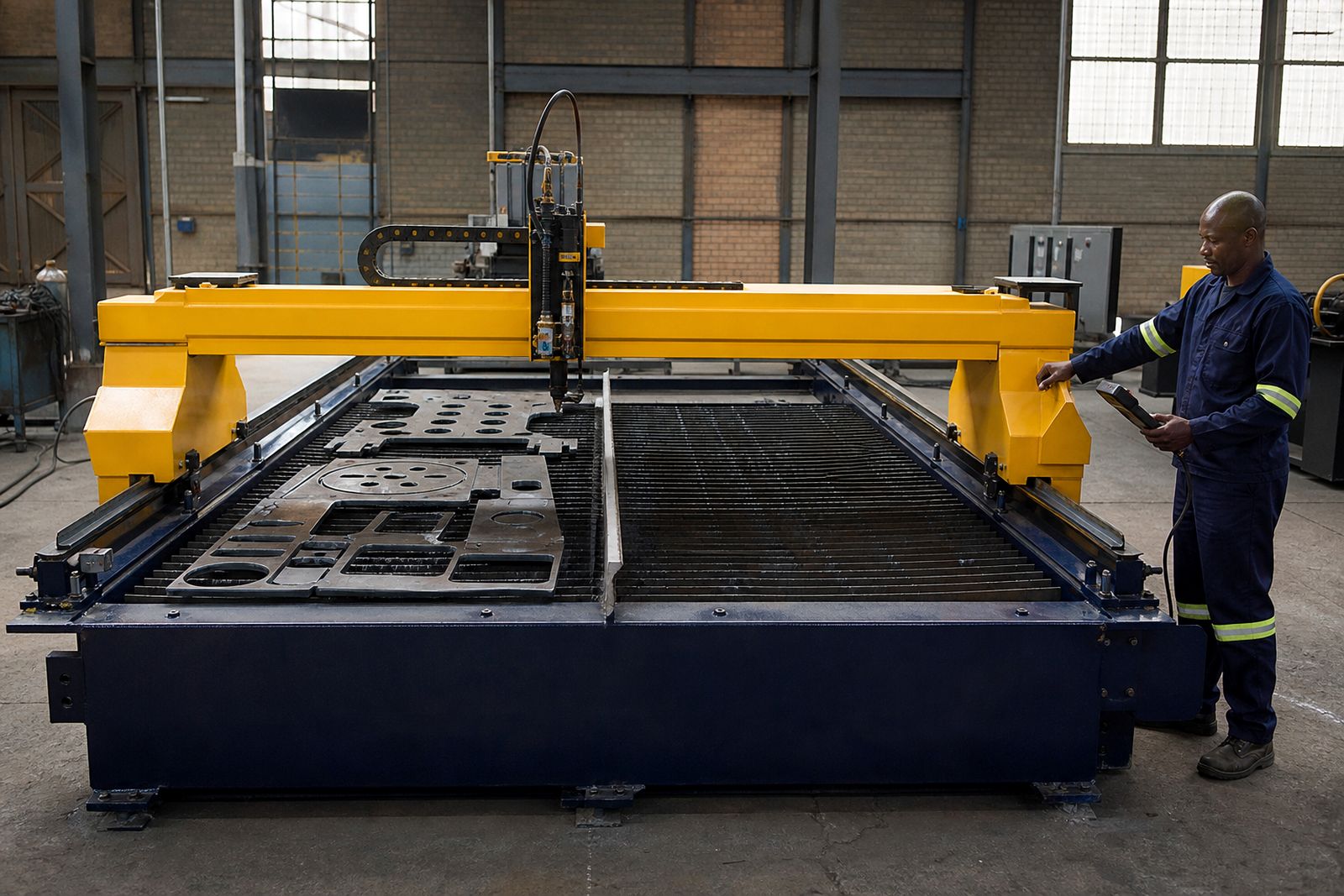
P-DIVIDER bed dividers
A zoned bed layout that lets loading and cutting happen in parallel on one machine.
Read more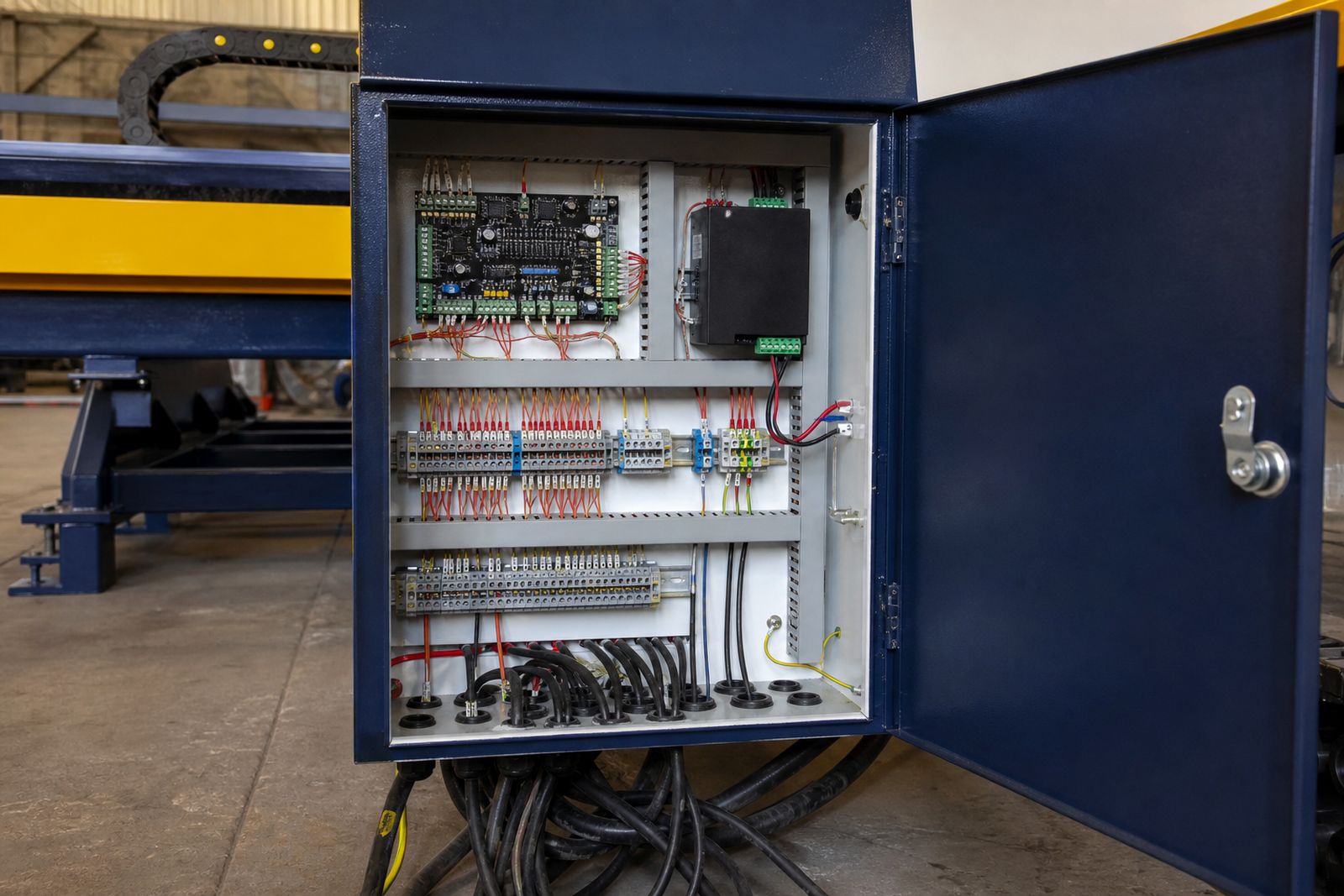
P-BOARD control boards
Control-cabinet motion and I/O boards specified for the machine, with fitment, setup and spare-board notes.
Read more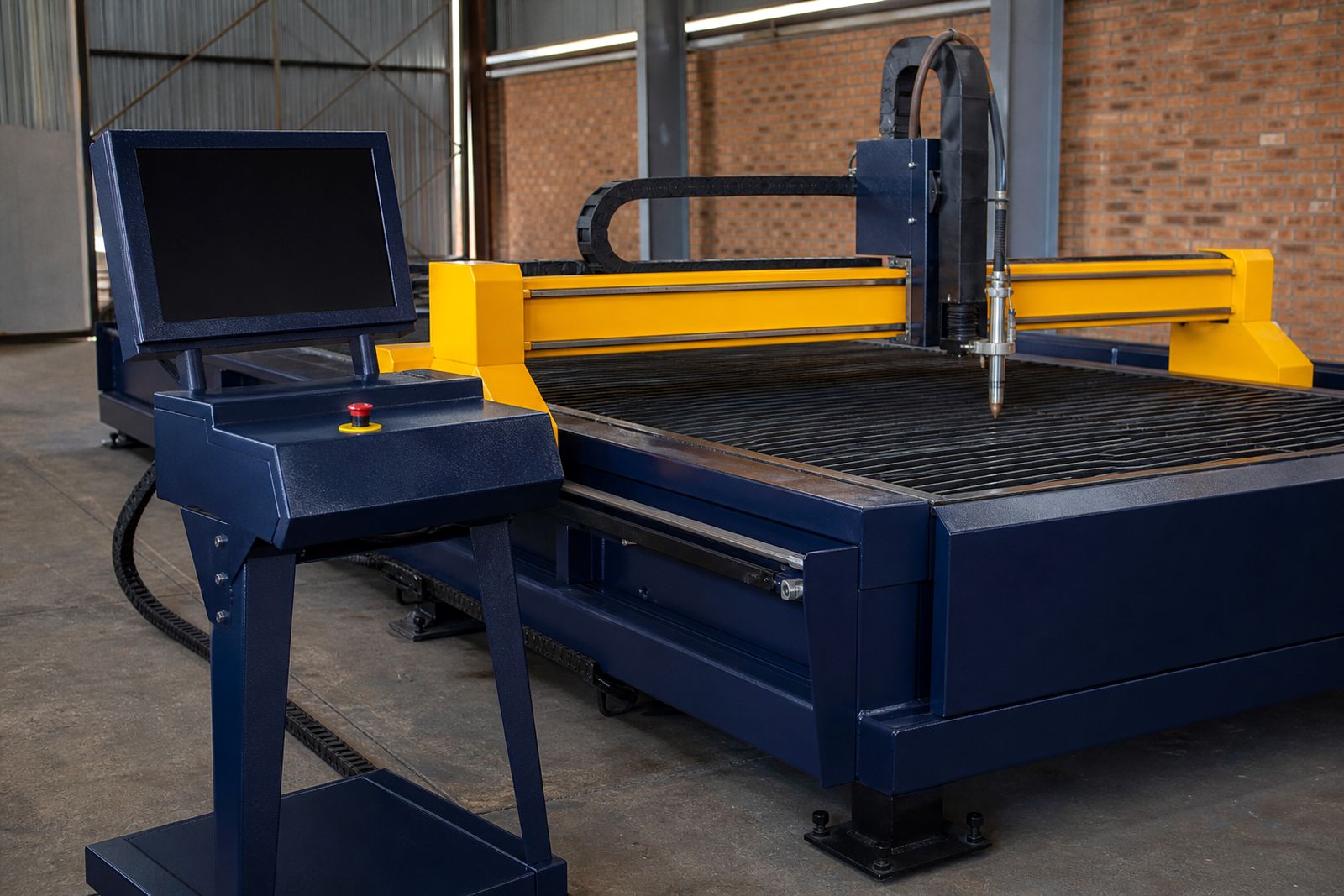
P-CONTROL operator stand
A fixed operator stand with practical screen placement and a safer emergency stop position.
Read moreQuestions we get asked
Can I order a machine without torch-height control?
Every build is configured by option code, and height control is one of the key choices because it affects cut height management and daily running. The detail sits under the P-THC options.
Do the option codes apply to all three bed sizes?
The option system sits across the standard-bed range, so the same option families are used on 1.3 x 2.5 m, 1.5 x 3.0 m and 2.0 x 3.0 m machines where they suit the build.
Can you fit these options to another make of plasma machine?
CNC Plasma Machine builds standard-bed machines in its own range and configures those by option code. We do not retrofit other makes.
Tell us about the job
Send sizes, materials and where you are through our contact form, and we will come back with the practical options.
Open the contact form