

P-DIVIDER bed dividers
P-DIVIDER separates the slat bed into zones so loading does not have to stop every cut. It suits shops that want steadier throughput from a standard-bed machine without moving up to a larger gantry.
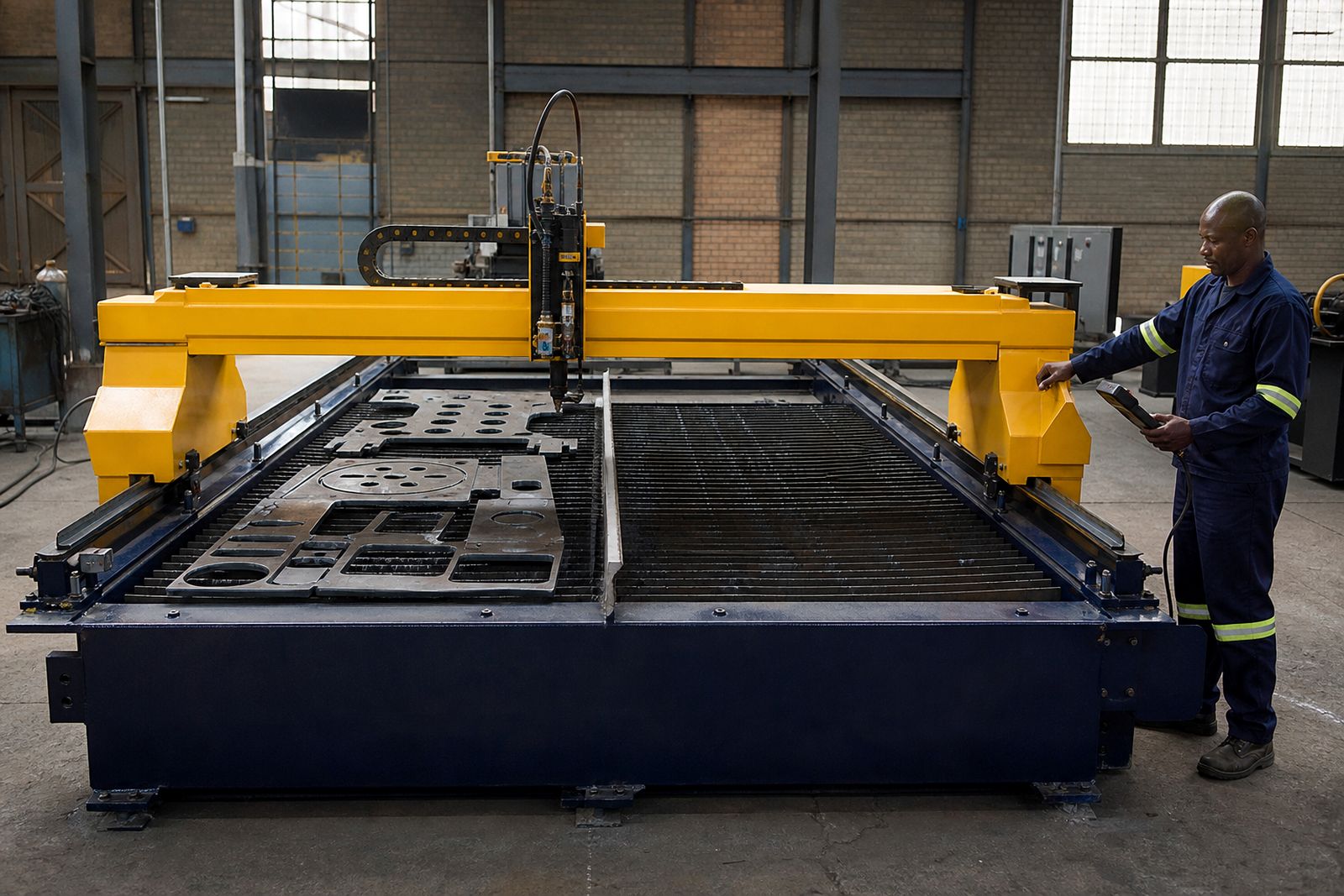
What P-DIVIDER changes on the bed
P-DIVIDER divides the bed into two working sections under the gantry. While the torch is cutting on one side, the operator can place the next plate or remove finished parts on the other side, provided the active cutting envelope has been planned correctly in the program.
On a standard open bed this matters most when small and medium sheets move through the shop all day. Instead of waiting for a full cutting cycle to finish before touching the table, the team uses the free side for loading, sorting and preparing the next job. It removes dead standing time that adds up over a week.
- Creates left and right bed zones under one gantry
- Reduces idle time between nested jobs
- Helps keep part sorting away from the active torch path
- Works best where jobs are planned as separate zone files
Shops that usually benefit from it
This option is worth paying for when the machine handles repeat work in batches, especially base plates, gussets, brackets and short production runs from sheet stock. It also helps where two operators share a machine area, one on loading and one on offloading, with enough room to work safely around the frame.
If most of your work is full-sheet cutting from edge to edge, bed division may not add much. The same applies where every plate is heavy enough to need a forklift movement across the whole bed before cutting starts. In those cases bed size choice and loading access often matter more than zoning.
- Good fit for mixed daily cutting with frequent changeovers
- Useful in small fabrication shops with limited floor space
- Less useful for full-sheet nests that occupy the complete bed width
- Less useful when crane or forklift loading blocks both sides anyway
How the divider is fitted and set during build
P-DIVIDER is configured as part of the machine layout before commissioning. The divider arrangement is matched to the bed size, slat support layout and access side of the machine so the zones make sense for the way sheets will be brought to the bed.
During setup our team checks home position, torch travel limits and working offsets for each zone. The operator is shown how to reference the plate position, choose the intended side and avoid crossing into the loaded area during a run. A bit of care here prevents nuisance stops and poor alignment later.
The divider keeps the basic machine footprint closer to the standard layout than moving up to a larger bed. It also affects how you use the free space around the frame. Clear operator access along the loading side is still needed for safe plate handling and part collection.
Compatibility with the standard-bed range
P-DIVIDER is available for the three standard-bed plasma machines built in Germiston: 1.3 x 2.5 m, 1.5 x 3.0 m and 2.0 x 3.0 m. It can be paired with torch-height control options and with the flame-cutting torch option where the job mix justifies that combination.
Control setup matters. Zoning works properly when the operator stand position, cable routing and job planning all support a clear split between the active side and the loading side. For that reason we look at divider layout together with the rest of the selected option codes rather than treating it as a stand-alone extra.
- Compatible with 1.3 x 2.5 m, 1.5 x 3.0 m and 2.0 x 3.0 m bed sizes
- Can be configured with P-THC and P-THC/ARC or P-THC/MEC
- Can be combined with P-FLAME where process layout allows
- Often paired with P-REMOTE for easier operator movement beside the bed
Mistakes that make a zoned bed frustrating
The most common mistake is assuming the whole bed remains available at all times. Once one side is being loaded or cleared, the cutting file must stay inside the other zone. If programming ignores that split, the gantry path can interfere with the work happening next to it.
Another problem is poor sheet placement. Operators sometimes leave too little clearance for clamps, torch lead movement or safe part removal, then blame the divider. The option works best when the plate size, nest origin and offloading method are thought through before the cycle starts.
- Programming across both zones during live loading
- Using divider layout without planning safe operator access
- Choosing it for jobs that always need the full table width
- Ignoring how scrap and cut parts will be removed from each side
What the operator is shown on the customer floor
During commissioning the machine is run on the customer floor with the zoned layout active. The operator is taken through side selection, datum setting, dry runs and practical loading sequence so the bed division becomes part of the daily routine from the start.
Training also covers where the divider helps and where it should simply be left out of the job plan. That matters in Gauteng workshops with tight production flow just as much as in coastal shops where floor area is expensive and every metre around the machine must earn its place.
If your work alternates between short repeat batches and occasional full-sheet jobs, P-DIVIDER gives the machine another useful mode without changing its basic purpose. It is there to improve the rhythm of production on a standard-bed machine and to support a more flexible cutting routine.
What our CNC Plasma Machine customers say
Verified Google reviews
Questions we get asked
Does P-DIVIDER let two sheets cut at exactly the same time?
One gantry still cuts one programmed path at a time. The benefit is that the free zone can be loaded or cleared while the active zone is cutting.
Is P-DIVIDER only useful on the largest 2.0 x 3.0 m bed?
It can help on all three standard bed sizes, especially where the job mix has shorter runs and regular plate changes.
Can I add P-DIVIDER to a machine from another make?
We do not retrofit other makes, and this option is configured on our standard-bed machines during build.
Also worth a look
Tell us about the job
Send sizes, materials and where you are through our contact form, and we will come back with the practical options.
Open the contact form