Notes
Buying and installing a standard-bed CNC plasma machine involves decisions before it reaches your floor and after it is commissioned. These notes are written for fabrication shops comparing bed sizes, option codes and site requirements in South African conditions.
Narrow the machine specification first
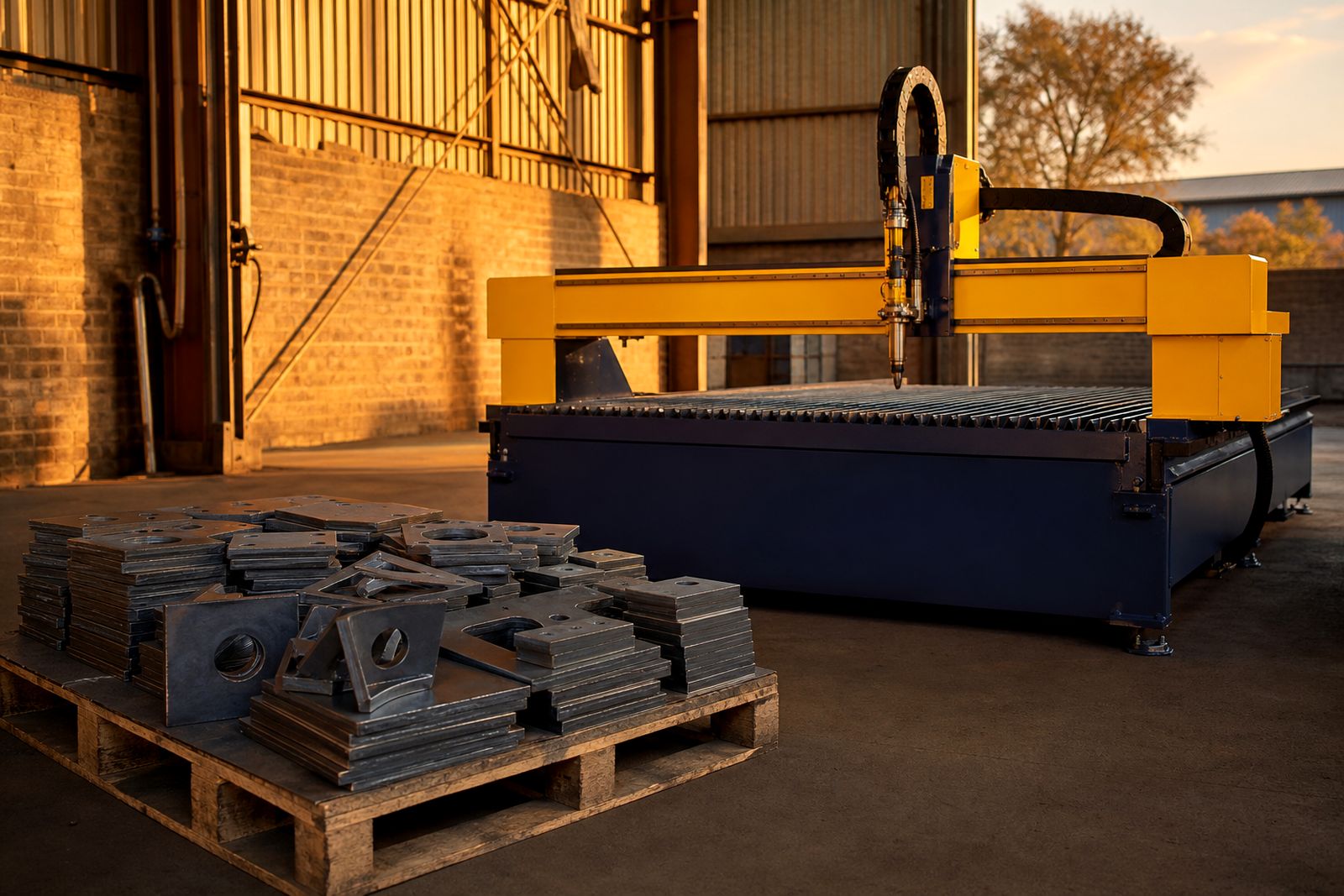
The practical points that usually shape a machine specification are cutting size, floor area, handling around the bed, torch control, and whether flame cutting must sit on the same frame. CNC Plasma Machine builds standard-bed machines in 1.3 x 2.5 m, 1.5 x 3.0 m and 2.0 x 3.0 m sizes, each configured by option code before build and then commissioned on the customer’s floor with operator training.
If you are still between two sizes, start with the sheet sizes you actually load each week rather than the occasional oversized plate. A shop cutting mostly smaller nests can waste floor space on a larger bed, while a shop handling frequent full-sheet work can lose time trimming stock to suit a smaller machine. The choice usually comes down to the material that moves through the shop week after week.
Comparing 1.3 x 2.5 m, 1.5 x 3.0 m and 2.0 x 3.0 m beds on a real floor
The three standard beds cover very different workshop layouts. In Germiston and across the East Rand, many shops need to balance machine size with forklift lanes, stock racks and welding bays instead of chasing the biggest table that fits through the door.
- A 1.3 x 2.5 m bed suits tighter floors where cut parts are smaller and manual sheet handling is still common.
- A 1.5 x 3.0 m bed is often the middle ground for general fabrication, giving useful sheet coverage without taking over the whole bay.
- A 2.0 x 3.0 m bed suits shops where larger plate sizes move regularly and there is clear access at the loading side and the discharge side.
- A bigger bed also needs room for loading, tip-up, ash removal and safe operator movement.
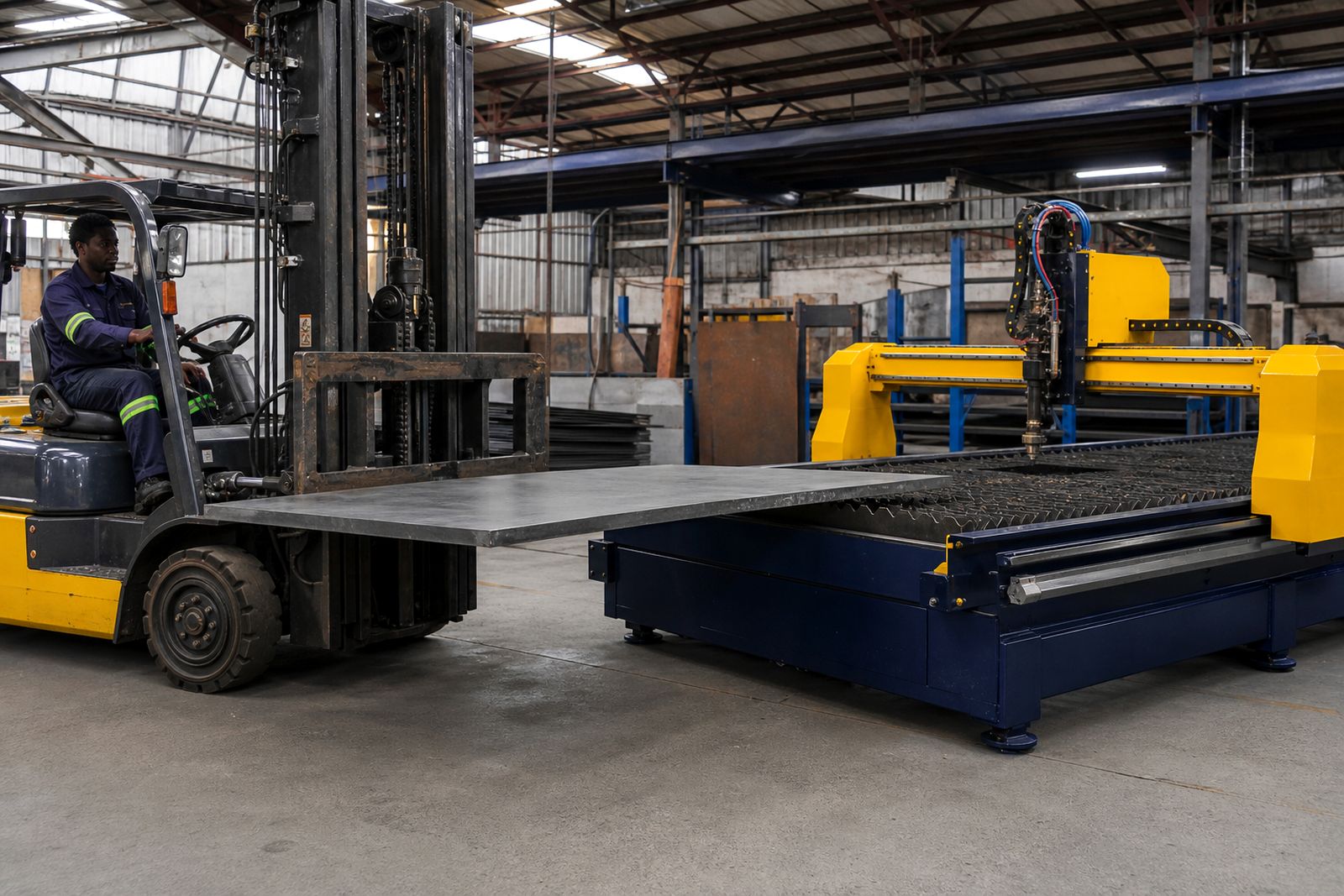
- If plate arrives on a truck and moves indoors by forklift, turning circle and approach route matter as much as bed length.
For many workshops, bed capacity and steady loading through a normal week both matter. That point gets missed quite often.
Option codes that change day-to-day use
Option codes on a quote define how the machine will be used and what the operator can do without workarounds. Torch-height control is one of the main examples. On thin material and warped sheet, height control affects cut consistency, consumable life and whether the operator can let a nest run instead of hovering at the controls.
- P-THC adds torch-height control to the machine specification.
- P-THC/ARC uses arc-voltage sensing for height correction during the cut.
- P-THC/MEC uses a mechanical method where the job and material suit that arrangement better.
- P-FLAME adds an oxy-fuel flame torch for thicker work where plasma is not the right process.
- P-REMOTE gives the operator a wireless pendant for positioning and setup movement around the bed.
- P-DIVIDER and P-BOARD relate to bed layout and control hardware choices on the machine.
Not every shop needs every option. A workshop cutting repeat parts from clean sheet has different needs from one dealing with mixed thickness plate and varied repair work, and the spec should match that reality.
Floor space, power and workshop conditions
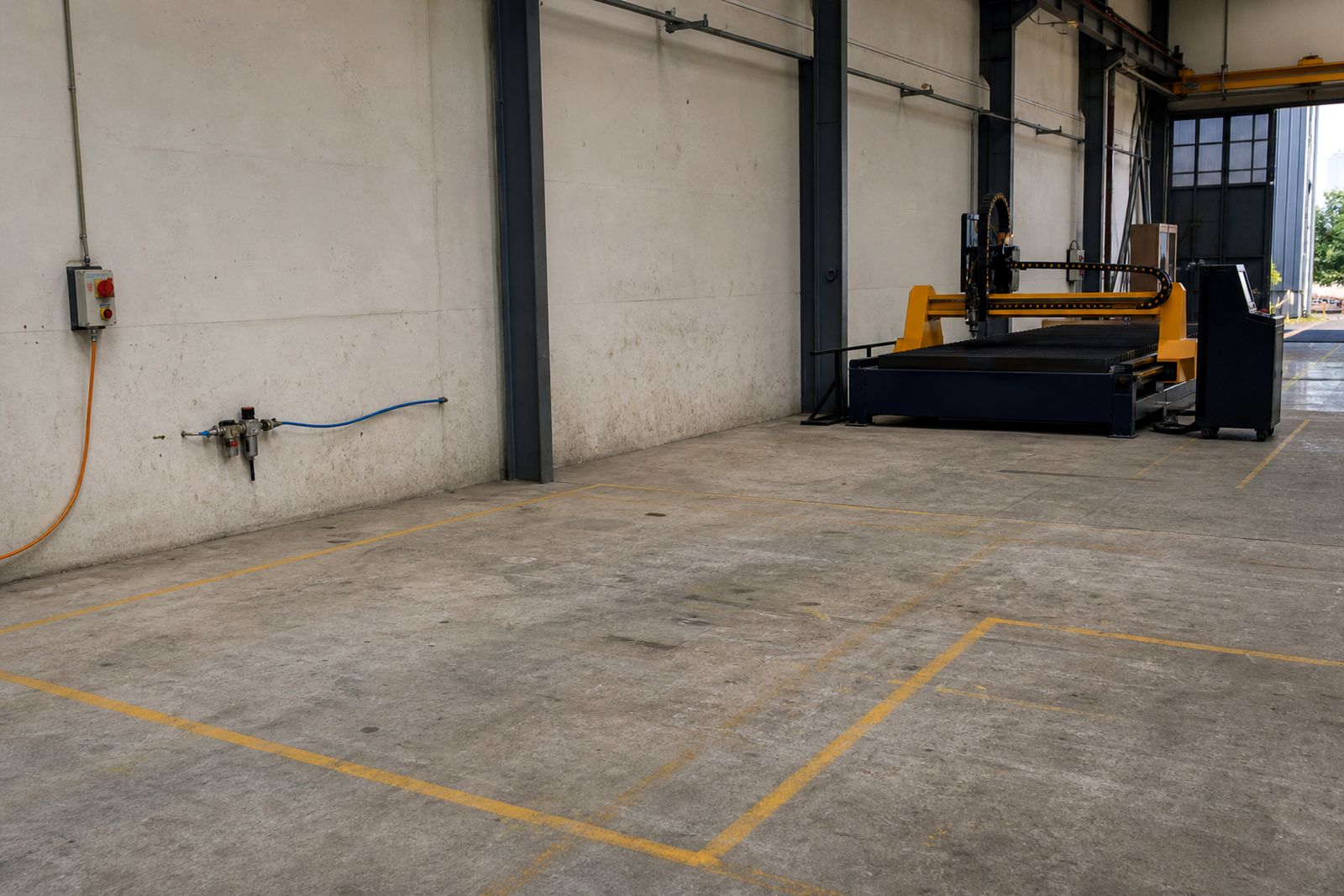
Before delivery, the floor should be ready for the bed size ordered, with working space around the frame and a clear path from offloading point to final machine position. This matters in older industrial areas where columns, low roller doors and uneven floor patches can complicate a move into place.
Mains supply and distribution need to match the machine and the cutting setup. Plasma cutting equipment and control components do not like unstable site conditions or untidy cabling, so proper power planning is part of the job rather than an afterthought. Coastal humidity can also affect storage of consumables and untreated steel around the machine, particularly in KwaZulu-Natal and the Western Cape where salt air gets into open workshops fast.
- Leave enough room to load sheets safely from the side you actually use.
- Check door height, internal turns and any crane or forklift constraints before the machine arrives.
- Keep the machine out of direct weld spatter zones and away from grinding dust where possible.
- Plan extraction, scrap handling and operator standing room at the same time as machine position.
Commissioning is where the specification meets the shop
A machine that looks right on paper still has to prove itself on the customer’s floor. Commissioning covers machine setup, motion checks, control verification and cutting tests, followed by operator training on the installed machine. That last part matters because the local floor, local material and local handling methods are where habits form.
Training usually covers machine operation, reference points, sheet setup, cut sequence basics, height control use where fitted, and routine cleaning around the bed. Shops with more than one operator should have all regular users present if possible, otherwise small misunderstandings tend to travel from shift to shift.
Next decisions after the basics
Bed size, floor readiness and option selection usually decide the shape of the buying and installation process. Where bed size is the sticking point, the main comparison is between the 1.3 x 2.5 m bed, the 1.5 x 3.0 m bed and the 2.0 x 3.0 m bed. Where machine size is settled but the floor is not, slab space, power position and workshop access need to be resolved before final machine position is fixed.
For option details, the separate pages on P-THC, P-THC/ARC, P-THC/MEC, P-FLAME, P-REMOTE, P-DIVIDER, P-BOARD and P-CONTROL explain what each code adds to a standard-bed build. If you want the team to look at your planned layout, send the machine size, material range, town and intended options through our contact form.
Explore the range
Questions we get asked
Do these notes apply to all CNC Plasma Machine models?
They apply to the standard-bed range in 1.3 x 2.5 m, 1.5 x 3.0 m and 2.0 x 3.0 m sizes, along with the option codes used on those machines.
Can I use these notes if I am still deciding on bed size?
They are useful when you are narrowing the machine around sheet size, floor space, handling method and the options needed for your work.
Does CNC Plasma Machine deliver outside Gauteng?
CNC Plasma Machine builds in Germiston and delivers and commissions across Gauteng, KwaZulu-Natal, the Western Cape and the rest of South Africa.
Tell us about the job
Send sizes, materials and where you are through our contact form, and we will come back with the practical options.
Open the contact form