

Floor and power checklist before delivery
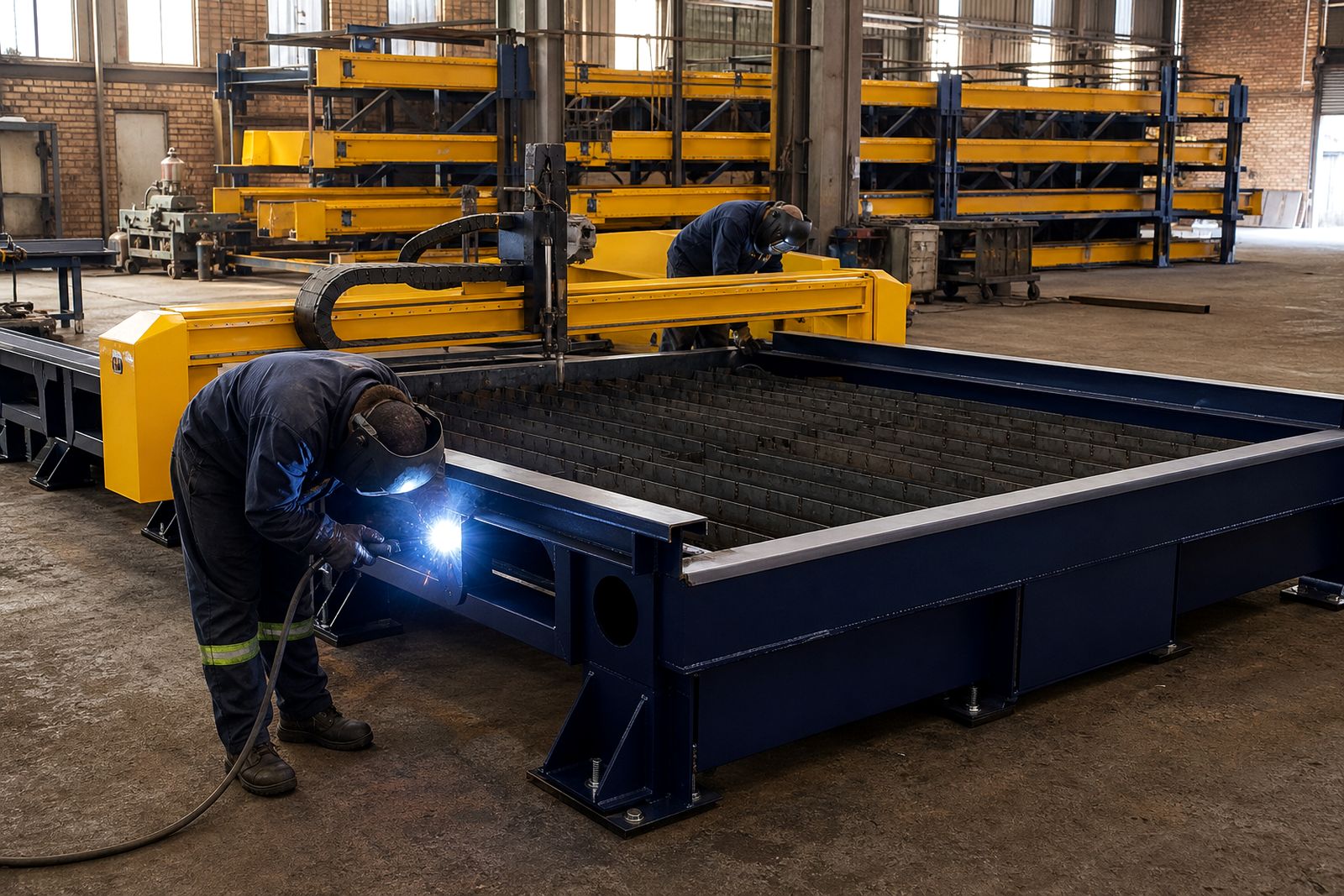
A CNC plasma table runs best when the floor, power feed, compressed air and fume handling are ready before delivery day. Get the practical site points sorted before our team brings the machine into position and starts commissioning.
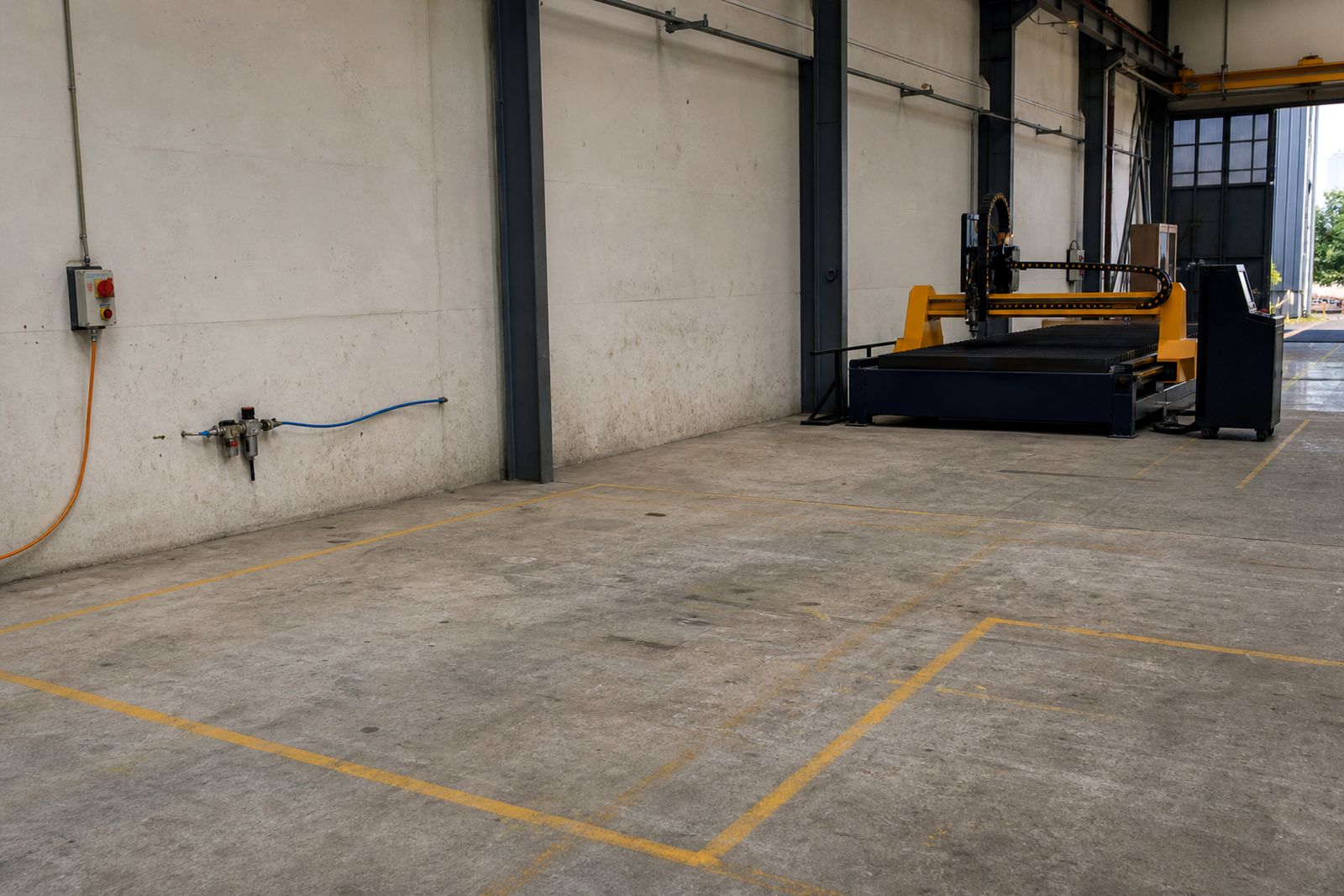
Allow working space around the table
The machine footprint matters, and so does the surrounding working area. You also need room for loading plate, removing cut parts, opening side access, routing cables and standing at the operator station. A bed that fits tightly between columns or shelving can become awkward once the gantry is in place and plate starts moving through the area.
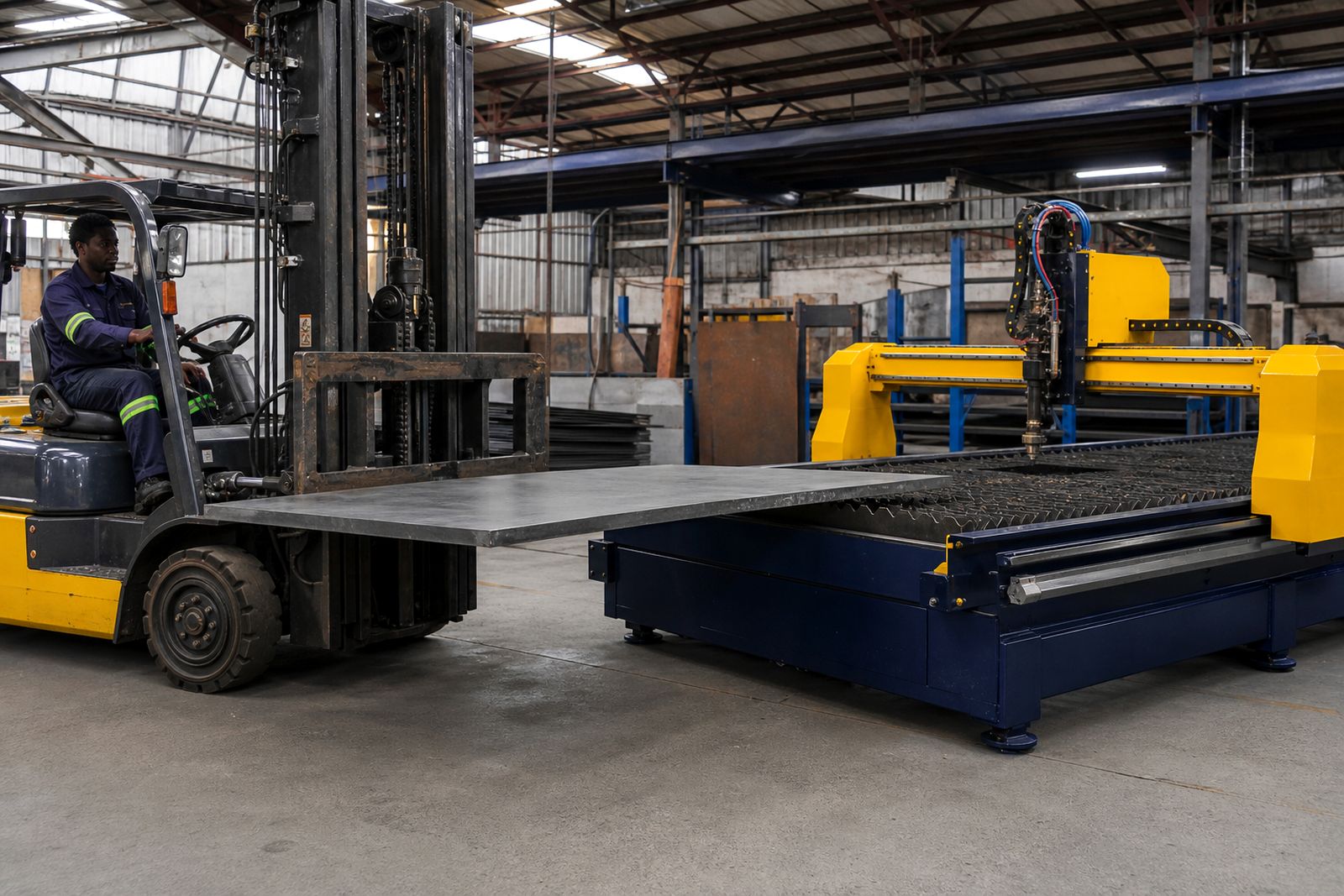
Leave working room on all sides where possible, especially along the long side used for loading material. If your shop uses a forklift, pallet jack or overhead lifting point for sheet handling, check the approach path in advance. Low door headers, ramps and tight turns often cause more trouble than the machine itself.
- Keep the final machine area clear of stored steel, pallets and offcuts.
- Allow handling room for full sheets matching your chosen bed size.
- Check doorway width and height from offload point to final position.
- Plan where the operator stand and control hardware will sit.
- Keep access open for future service work and routine cleaning.
The slab must be level, dry and able to carry the load
Our standard-bed machines are built on a steel frame and need a stable floor under the full machine length. A sound concrete slab is the normal requirement. Broken edges, loose screed, paving blocks, asphalt and patched sections can create twist in the frame and affect the bed level if they are under load points.
Sweep the area well before delivery and make sure the slab is dry. Water, cutting sludge and oily dust under the base make accurate levelling harder. If the machine is going into a coastal workshop, pay attention to damp corners and salt build-up around roller doors, it matters more than some people think.
If the floor slopes noticeably, tell us through our contact form before delivery so the installation plan can be checked properly. Minor levelling can be dealt with during commissioning, but a badly uneven floor may need civil work first.
- Concrete slab in good condition, with no loose blocks or damaged screed.
- No standing water, coolant puddles or oil in the install area.
- Floor level checked over the machine footprint and operator position.
- No fresh concrete that is still curing.
- Clear lifting path from truck offload point to machine location.
Power feed should be close, protected and sized for the machine
The control system, drive components and plasma cutting setup need a stable mains supply brought to the machine area. The exact electrical requirement depends on the chosen machine and options, so the practical step is to have a qualified electrician prepare an isolator and final connection point near the installation position after the machine specification is confirmed.
Do not rely on a long extension lead run across a workshop aisle. Voltage drop, accidental unplugging and cable damage are common causes of avoidable stoppages. Keep the circuit dedicated where possible, with proper earthing and sensible cable routing away from hot work, sharp plate edges and vehicle traffic.
If your premises are affected by regular load-shedding or generator changeover, mention that before commissioning. Control electronics do not like erratic supply and it is better to deal with protection and changeover arrangements before the first cut is made.
- Qualified electrician to prepare the final supply point.
- Isolator positioned close to the machine location.
- Proper earthing in place and checked at site level.
- No temporary extension lead as the normal operating feed.
- Cable route protected from forklifts, sparks and scrap.
Compressed air supports cut quality
Plasma cutting depends on clean dry air. If the air line carries water, oil or heavy contamination, cut quality suffers and consumables wear faster. The compressor should be sized for steady demand and the pipe run to the machine should avoid unnecessary restrictions. A tired little compressor in the far corner of the shop often turns into a daily headache.
Bring the air point near the machine and fit proper filtration and moisture control upstream. In humid coastal areas this is especially important, and in winter early morning condensation can catch a shop out even inland. Drain receivers and filters properly before commissioning day.
Keep the hose run neat and out of walkways. Kinked or crushed hose can cause pressure variation during cutting which shows up on the plate.
- Compressor capacity matched to the cutting setup.
- Dry clean air with moisture separation and filtration.
- Air take-off point close to the machine position.
- Receiver and filters drained before installation.
- Hose routing kept short, safe and easy to inspect.
Plan fume handling and general workshop ventilation
Plasma cutting creates smoke and fine particulate that must be managed properly inside the shop. The right arrangement depends on your premises, local rules and the volume of cutting you expect to do. A small enclosed unit with poor airflow can become unpleasant very quickly, while a high-roofed industrial bay may still need directed extraction at the table area.
Plan the fume path while the machine is in use as well as the physical machine position. Avoid placing the table where smoke will drift into neighbouring workstations, offices or a shared passage. Municipal requirements and landlord rules can also apply to extraction discharge, especially in built-up industrial parks.
If you already have extraction equipment on site, check whether its capacity and duct routing suit the new machine position. Sort that out before delivery so commissioning can run cleanly.
Ready the site for offload, commissioning and operator training
Delivery day goes better when one person on your side has authority to point out the final position, power isolator, air point and access route. Move unrelated jobs out of the install area so there is enough room to level the machine, connect services and run the first cuts. Commissioning includes setup on your floor and operator training, so the intended operators should be available on site.
Keep a few sample plates ready if you want the first test cuts done on the material you use most often. That helps the training session feel relevant from the start. It also gives your operators a better sense of pierce height, feed behaviour and how the finished edge should look on their own work.
- Nominate a site contact for delivery and machine positioning.
- Have operators present for handover and training.
- Keep test material available near the machine area.
- Ensure lighting is good around the full table length.
- Clear other fabrication work away from the install zone.
If any point on this checklist is uncertain, raise it through our contact form before the machine leaves Germiston. A short site note with a few dimensions and photos usually clears up most issues and avoids a messy install day.
Questions we get asked
Does the machine need to be bolted to the floor?
That depends on the site and the final configuration. A sound level concrete slab is the main requirement, and the installation method is checked during commissioning on your floor.
Can we place the table in a small room with one roller door?
A small room with one roller door can work if there is enough space for sheet handling, operator access, air and power connection, and fume control. Tight rooms often work poorly once full-size plate starts moving in and out.
What if our air and power points are not in the right place yet?
It is better to finish those services before delivery. Temporary hoses and leads can interfere with commissioning and can cause operating problems once production starts.
Also worth a look
Tell us about the job
Send sizes, materials and where you are through our contact form, and we will come back with the practical options.
Open the contact form