P-FLAME oxy-fuel flame torch
P-FLAME adds a second cutting process to the machine for plate that is too thick for practical plasma work. It is specified as an option on our 1.3 x 2.5 m, 1.5 x 3.0 m and 2.0 x 3.0 m standard-bed builds, then fitted and set on site during commissioning.
Where P-FLAME fits in the machine
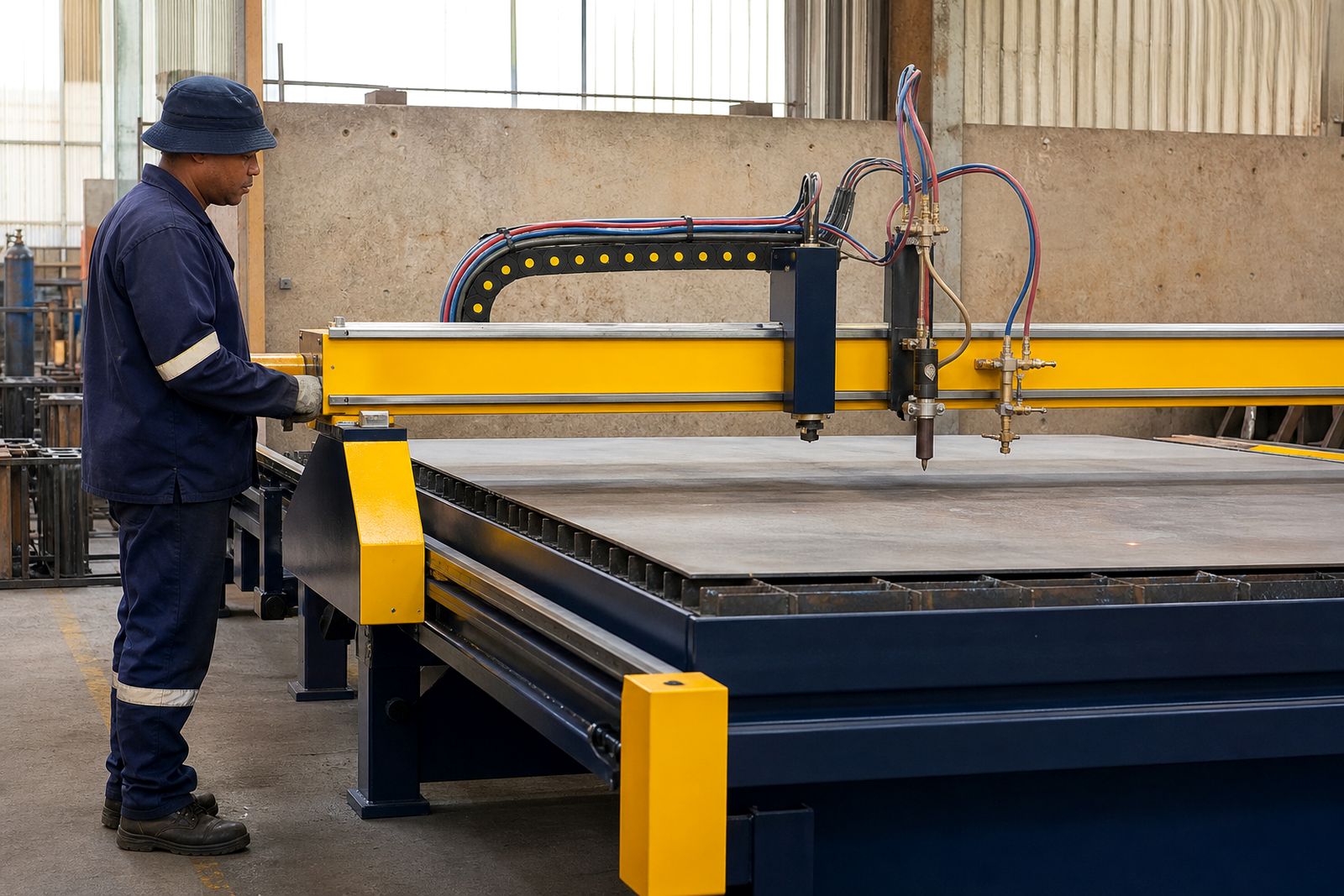
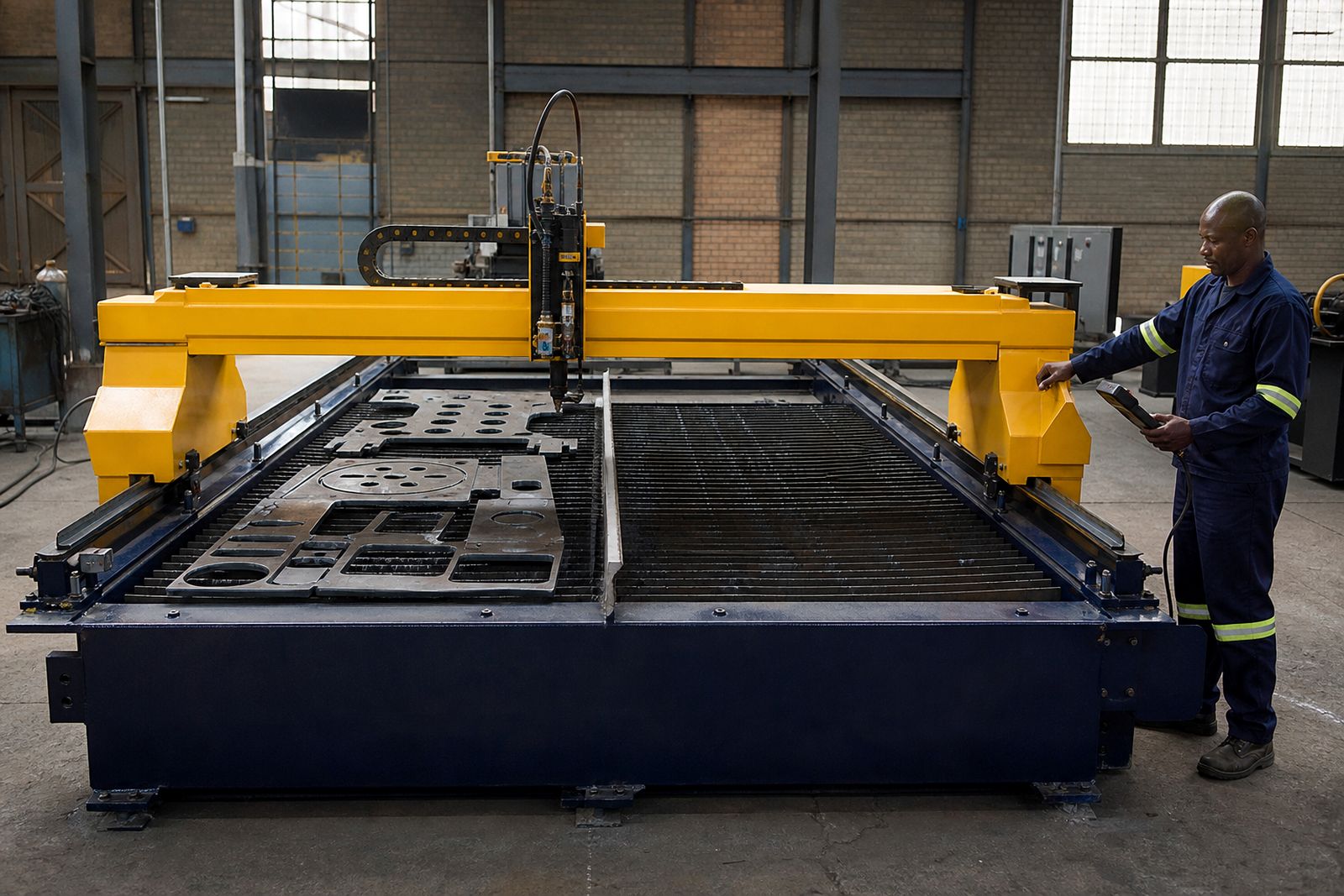
P-FLAME is an oxy-fuel flame torch mounted as a second station on the gantry alongside the plasma torch position. It adds oxy-fuel cutting for thick carbon steel plate, where flame is the sensible choice for cost, consumable spend and edge quality. On jobs like base plates, gussets, heavy brackets and thicker cleats this option can make the machine far more useful across a wider plate mix.
The flame torch covers heavier mild steel work where a clean preheat and oxygen cut are more practical. The operator selects the correct process for the plate on the day, with settings and pierce approach checked during commissioning.
- Second torch station on the same CNC machine
- Used for thicker carbon steel plate
- Specified with a standard-bed 1.3 x 2.5 m, 1.5 x 3.0 m or 2.0 x 3.0 m machine
- Set up as part of floor commissioning and operator training
When the option earns its place
P-FLAME is worth paying for when the workshop regularly cuts thicker mild steel and wants to keep that work on the CNC bed instead of moving it to separate manual cutting. If most jobs sit in lighter gauges, the option may stand idle for long periods. Where plate thickness changes from day to day, though, having both processes on one machine avoids a lot of handling.
Shops that cut structural parts often find the flame torch useful for occasional heavy sections that do not suit standard plasma settings. It also helps where edge condition on very thick carbon steel matters more than outright speed. The strongest cases are the awkward jobs that interrupt production when there is no thicker-plate method on the machine. Those parts often decide the value of the option.
- Frequent heavy mild steel parts
- Mixed work that ranges from sheet to thick plate
- Need to cut thicker items without shifting to manual marking and hand cutting
- Work where material cost makes a bad cut expensive
How it is fitted and commissioned
The torch assembly is fitted to the machine as an option during build, with the mounting position, hose routing and machine clearances checked before dispatch. On site the torch station is aligned, travel is tested and the operator stand is set so the machine can be run with sensible access to controls and gas gear. Our team commissions the option on the customer’s floor as part of the machine handover.
Flame cutting relies on correct gas line routing, safe bottle position, ignition procedure and pierce approach. During setup we check motion, torch position over the slats and practical cutting parameters for the plate sizes the shop actually uses. That training matters a lot because many bad flame cuts come from rushed preheat and poor height judgement. Good results depend on the machine, the setup and the operator routine.
Compatibility across bed sizes and options
P-FLAME is available on the three standard-bed machines in this range: 1.3 x 2.5 m, 1.5 x 3.0 m and 2.0 x 3.0 m. It is intended for new built-to-order machines from our Germiston base. We specify it for our own machines, and we do not fit it to other makes, portable cutters or oversized gantries. The option must be planned with the rest of the machine specification so the torch stations, controls and operator workflow all match.
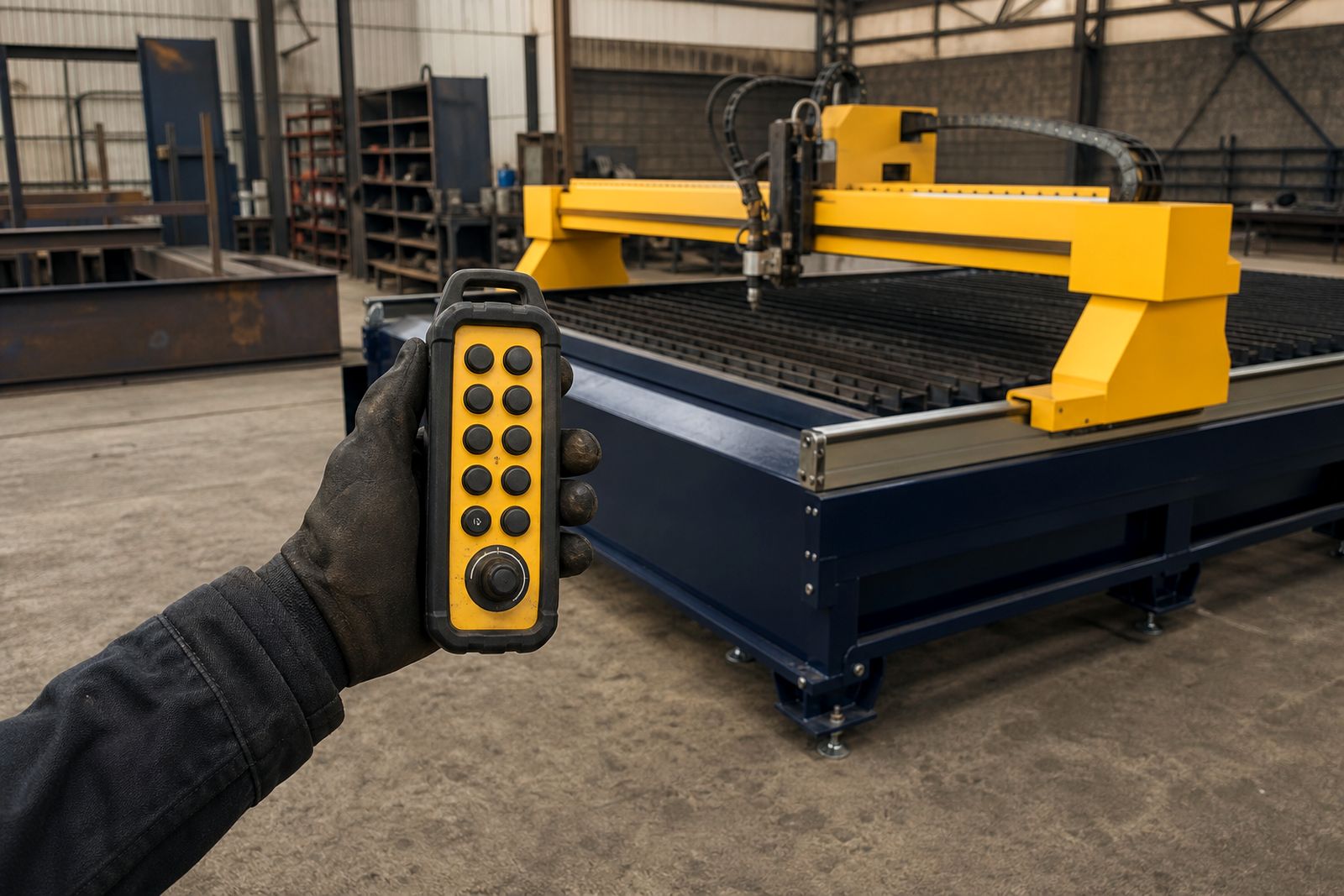
Many buyers pair this option with torch-height control on the plasma side, bed dividers for managing support zones and the remote pendant for easier jogging during setup. The exact combination depends on plate size, material flow and the level of operator involvement on each shift.
- Available on 1.3 x 2.5 m, 1.5 x 3.0 m and 2.0 x 3.0 m standard-bed machines
- Specified at build stage by option code
- Not offered for pre-owned equipment
- Not used to retrofit other machine makes
Common mistakes that cause poor results
The most common mistake is choosing flame cutting for work that still sits comfortably in the plasma range. That raises heat input and slows the job without a good reason. Another regular problem is expecting the flame torch to handle materials it is not meant for. This option is intended for carbon steel plate and suits that job well.
Operators also run into trouble when plate support is uneven, slats are neglected or the preheat is rushed. If the torch height, travel start or pierce timing is off, the cut edge suffers quickly. Thick plate is less forgiving than light sheet and the machine needs a steady routine around setup, gas condition and plate placement, even when the job looks simple.
- Using flame on plate that plasma should cut
- Trying to use the process on unsuitable materials
- Poor gas setup or untidy hose routing
- Skipping plate support checks before a heavy cut
- Rushing preheat and start position
Practical notes for quoting the option
When asking for P-FLAME on a machine, include the bed size, the thickest carbon steel plate you expect to cut and whether the work is occasional or part of the weekly mix. That helps tie the torch station option to the rest of the machine specification instead of treating it as a loose extra. Customers in Gauteng often collect the machine with commissioning done on their floor, while installations in KwaZulu-Natal, the Western Cape and further afield are delivered and set up as part of the project.
When comparing the option with a larger plasma setup, thickness range and running cost usually decide the fit. A shop cutting mostly sheet with a few heavy plates each month may do well with P-FLAME, while a shop chasing production on thin material all day probably needs to keep the machine focused on plasma work. A bit of planning here saves money later, and it avoids a spec that looks good on paper but gets used wrong in practice.
What our CNC Plasma Machine customers say
Verified Google reviews
Questions we get asked
Can P-FLAME cut all materials on the machine?
This option is intended for carbon steel plate. Plasma remains the correct process for many thinner jobs and for materials where oxy-fuel is not suitable.
Is the flame torch worth adding if we only cut thick plate occasionally?
It can be, especially if those parts interrupt production or currently need manual cutting away from the CNC bed. The decision usually depends on how often the thicker work appears and how costly it is to handle it separately.
Can this option be added later to another machine make?
P-FLAME is specified and fitted on our own standard-bed built-to-order machines. We do not retrofit other makes.
Also worth a look
Tell us about the job
Send sizes, materials and where you are through our contact form, and we will come back with the practical options.
Open the contact form