P-THC/MEC mechanical height control
P-THC/MEC is a floating-head height control option for straightforward plasma cutting on flat sheet. It gives the machine a reliable touch-off routine without the extra arc-voltage layer used on more varied plate work.
Where P-THC/MEC fits on the machine
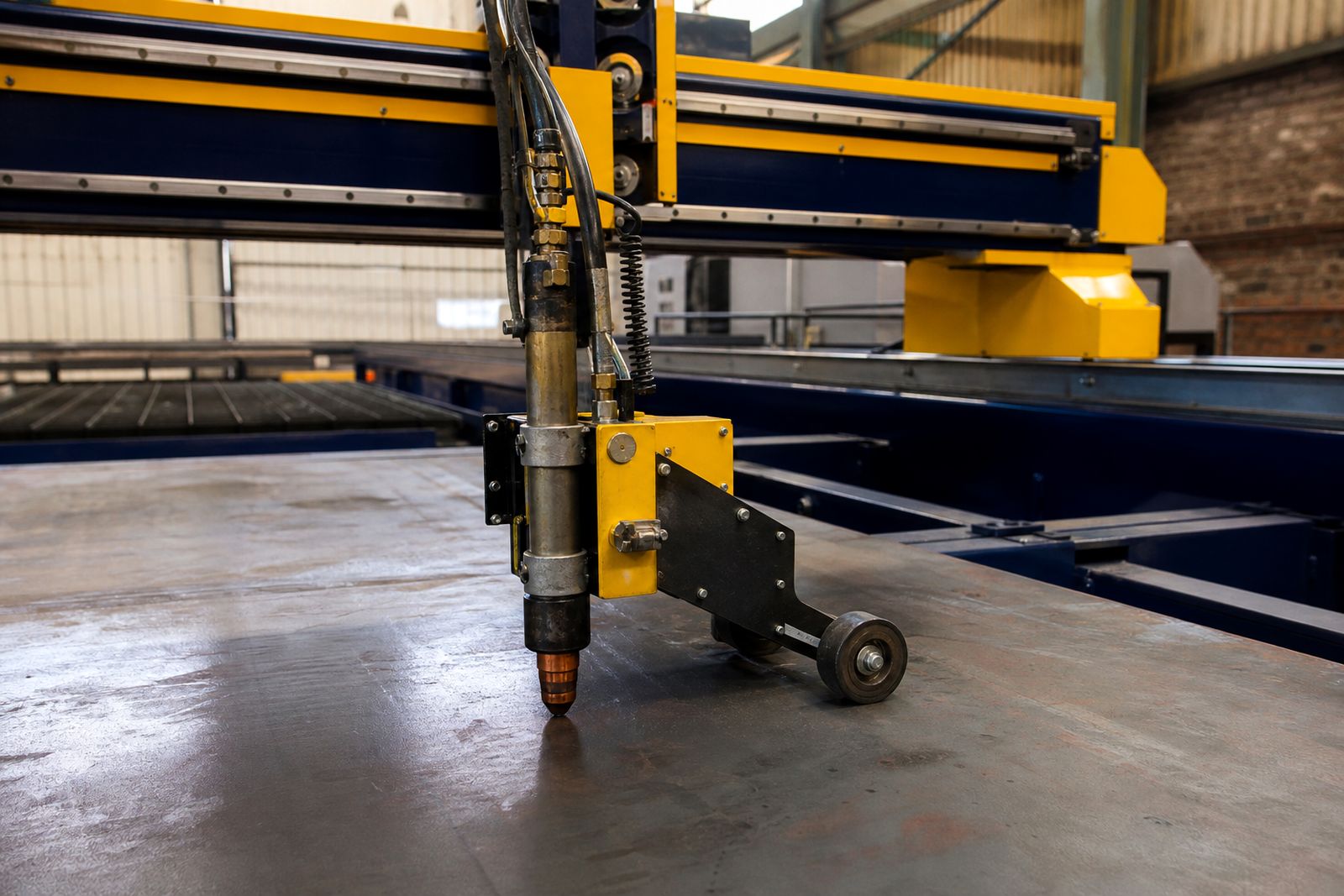
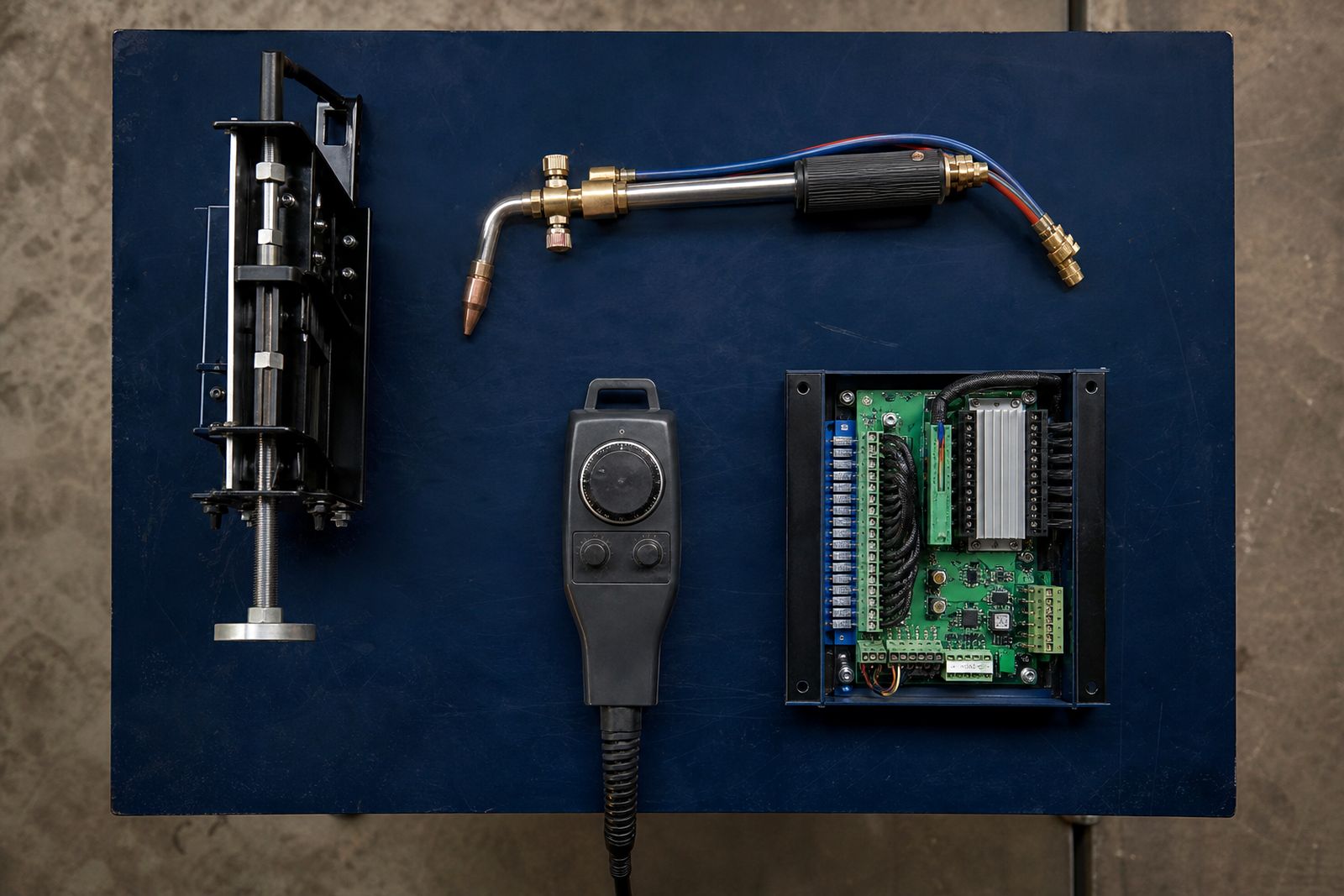
P-THC/MEC is the mechanical height control package used on our standard-bed machines when the work is predictable and the sheet stays reasonably flat. The torch carriage uses a floating head to find the top of the material before the pierce cycle starts, then the machine lifts to the set pierce height and drops to the cut height for the run. On a shop floor cutting light brackets, cover plates and repeat shapes from standard sheet, that sequence is often all that is needed.
This option uses a physical touch-off before the cut and suits jobs where sheet variation is modest and consumable condition is watched properly. The machine follows the programmed height once the torch is moving. That makes it simpler to set and simpler to fault-find, which many operators prefer on steady production work.
- Floating-head touch-off before each pierce
- Set pierce height and cut height entered in the control
- Best suited to flat sheet and lighter section work
- Less wiring and fewer variables than arc-voltage control
When it earns its place on a build
This option is worth paying for when the machine will mainly cut mild steel sheet in a repeatable thickness range, with nests that start often and need a clean, consistent reference point. It is also useful where the operator wants a straightforward setup without tuning voltage targets, response rates or live height correction parameters. For many small to mid-size fabrication shops, that is a very normal day’s work.
If the material arrives flat, the bed is kept in decent order and the torch is not being pushed into heavier plate where warp becomes a real issue, P-THC/MEC covers the job well. If plate condition changes a lot across the sheet or heat distortion builds during long runs, the arc-voltage option is usually the better route.
- Good fit for standard flat sheet
- Useful on lighter gauges and short to medium cut cycles
- Suitable where operators want direct setup values rather than voltage control menus
- Often chosen for repeat parts cut from the same stock sizes
How we fit and set it up
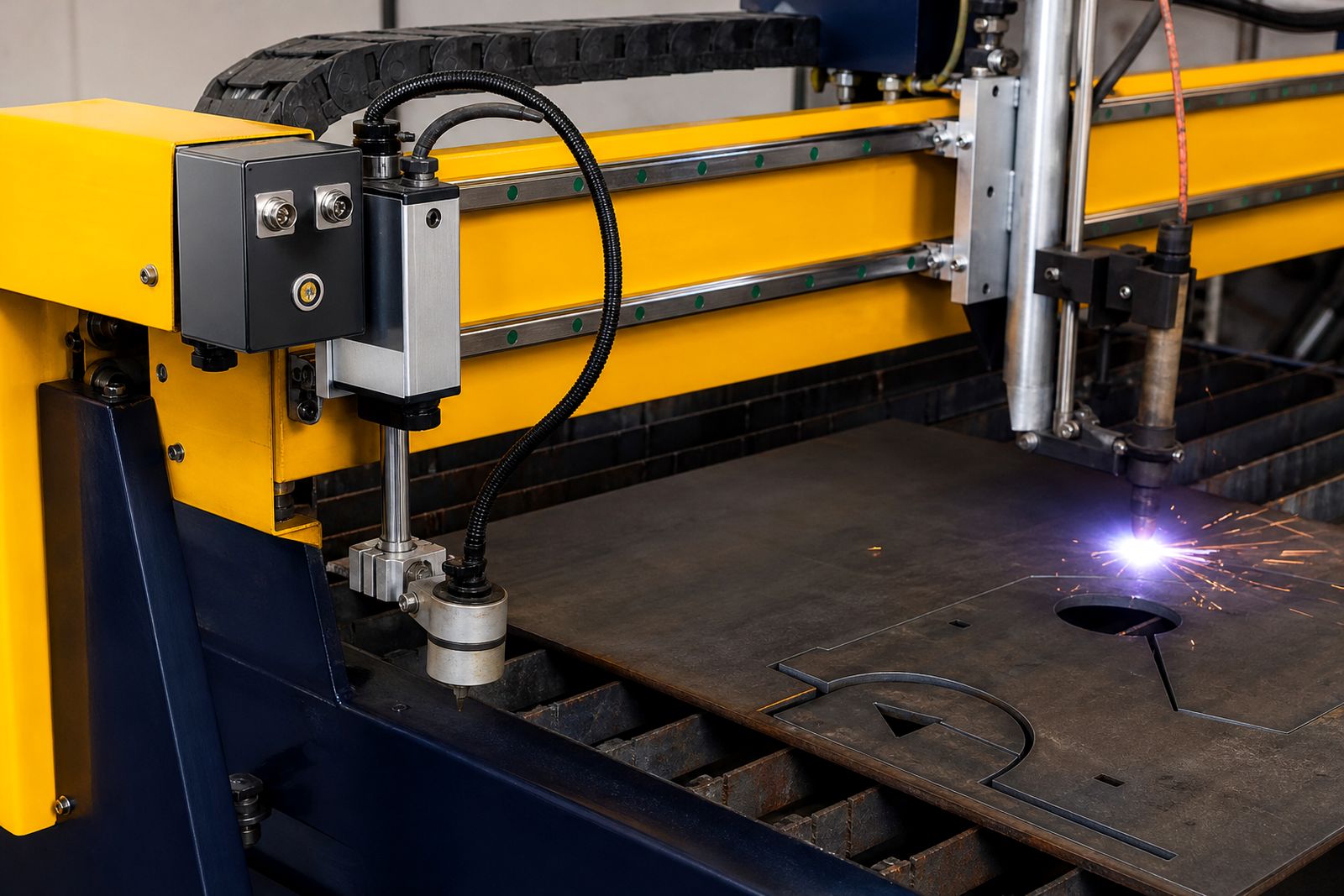
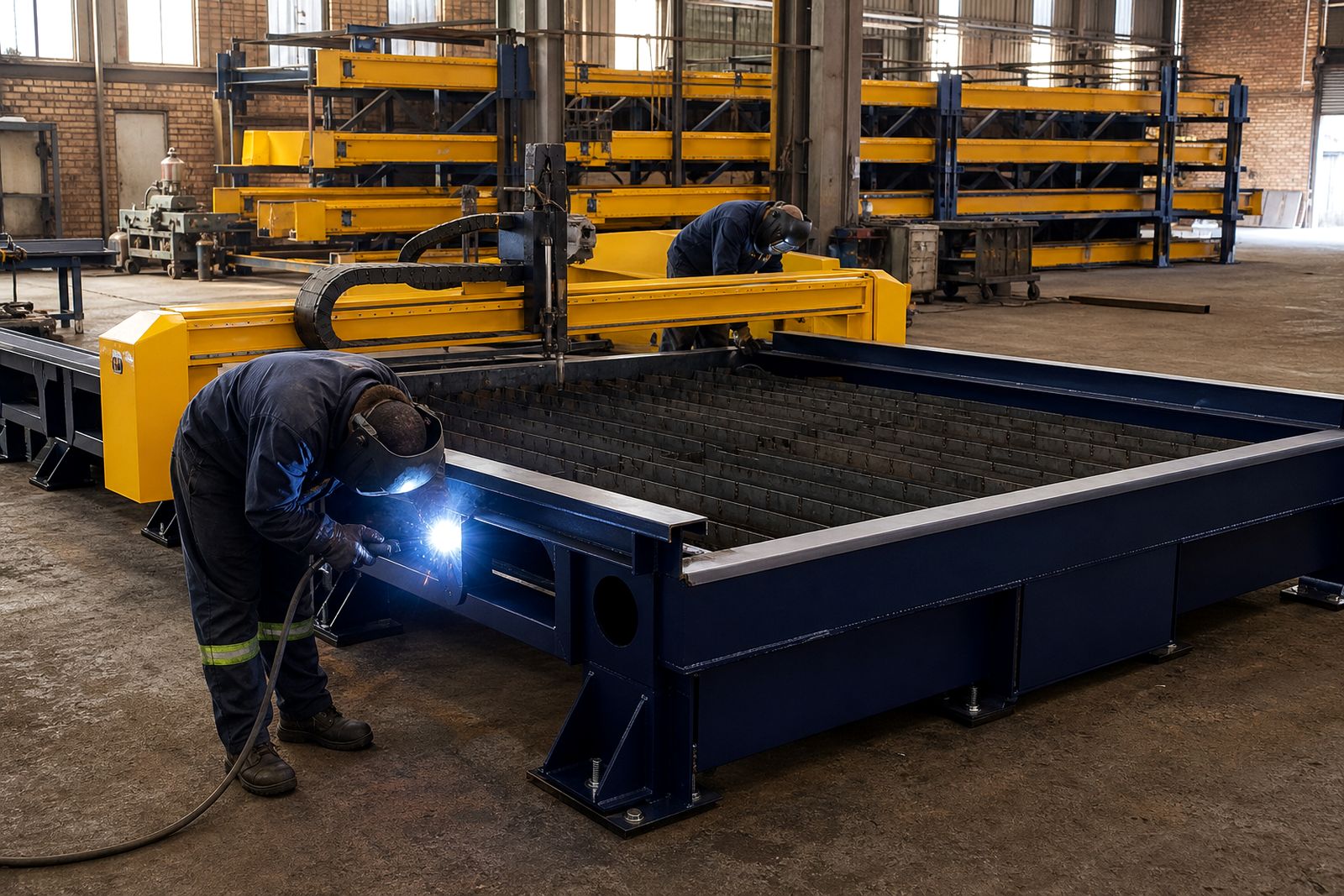
P-THC/MEC is built into the Z-axis torch assembly during machine assembly in Germiston, then checked as part of the full machine setup before delivery. The floating-head travel is set so the torch can touch the plate, trigger the reference point and return cleanly without drag. Switch actuation, Z-axis zero routine and pierce delay values are then checked with test cuts on suitable material.
On site, the machine is commissioned on the customer’s floor and the operator is shown how the touch-off cycle works, where the height values sit in the control and what signs point to a poor setup. That training matters more than people think because a small error in consumable length, torch clamp position or pierce height can show up straight away at the cut edge.
The option is straightforward to use and it rewards a disciplined operator.
Compatibility across the standard bed range
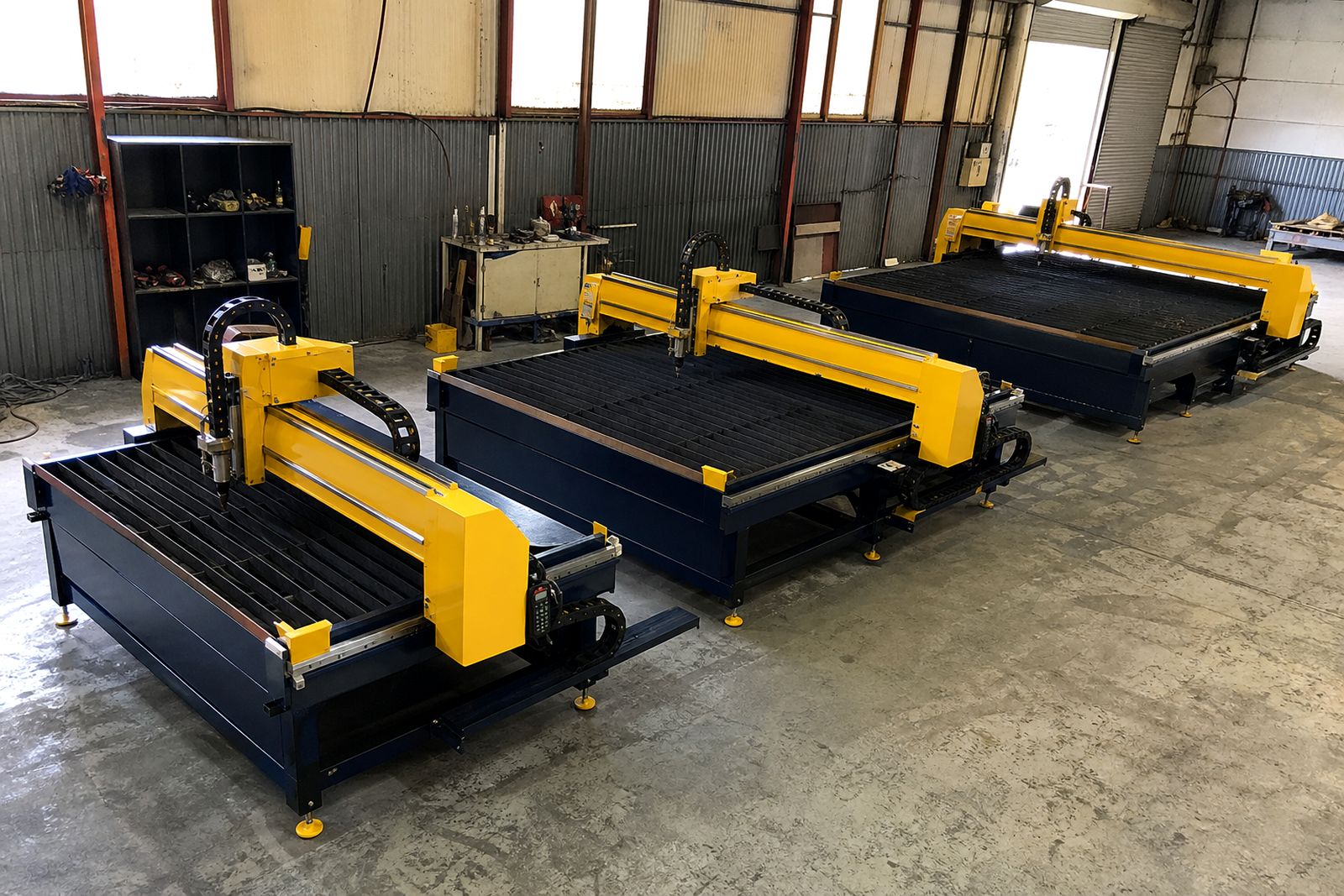
P-THC/MEC can be specified on the 1325, 1530 and 2.0 x 3.0 m machine sizes. It works with the standard-bed platform and can be ordered alongside the common machine options where the job needs them. In practice it is often paired with a remote pendant for setup moves and with bed dividers where small offcuts and slag control matter to the customer’s workflow.
There are however some clear limits. We do not fit this option to portable cutters because we do not sell portable cutting machines, and we do not build it into heavy 3 m plus gantry layouts outside the standard-bed range. It is available only as part of our standard-bed machine build.
- Available on P-1325T, P-1530T and P-2030T
- Can be ordered with P-REMOTE, P-DIVIDER and standard control board choices
- Can be combined with a flame torch package where the machine specification calls for it
- Not offered as a retrofit to other machine makes
Mistakes that cause rough cuts or broken consumables
The most common mistake is expecting a floating-head system to correct for a badly bowed sheet while cutting. It will reference the top surface before piercing, but after that the machine is following the programmed height. If the plate lifts, drops or moves from heat, the torch will not automatically trim height in real time. That is where people get dross, bevel variation or tip strikes.
Another regular issue is poor housekeeping around the bed. Slag build-up, unsupported small blanks and sheet that is not sitting properly can upset touch-off and give the operator false confidence. The machine only references what it actually touches. If that surface is unstable the cut starts from a bad baseline, and then problems stack up fast.
- Running warped plate as if it were flat sheet
- Ignoring consumable wear and torch length changes
- Setting pierce height too low for the thickness
- Letting offcuts tip up into the torch path
- Skipping a proper zero check after torch service
Where this option makes the most sense
P-THC/MEC suits workshops that want a dependable touch-off routine without moving into a more involved height-control package. For light fabrication in Gauteng and for branches farther out where operators prefer fewer variables, it is a sensible option. Used on the right material, it cuts cleanly and keeps setup plain.
If your work includes frequent plate distortion, mixed thickness in one shift or longer cut runs where height drift starts to matter, the arc-voltage option is the one to compare against this package. If the work is mostly flat sheet and repeatable profiles, P-THC/MEC usually keeps things neat and easy to manage.
What our CNC Plasma Machine customers say
Verified Google reviews
Questions we get asked
Is P-THC/MEC the same as live arc-voltage height control?
P-THC/MEC uses a mechanical touch-off to find material height before piercing, then follows the set cut height. It does not adjust height continuously from arc voltage during the cut.
Can I add this option later to another machine make?
We do not retrofit other makes, and this option is specified as part of our standard-bed machine build.
What material condition suits this option best?
It performs best on reasonably flat sheet where the surface is stable at the pierce point and through the cut path. If the plate is badly warped or lifts with heat, a different height-control approach is usually better.
Also worth a look
Tell us about the job
Send sizes, materials and where you are through our contact form, and we will come back with the practical options.
Open the contact form