P-THC/ARC voltage-sensing height control
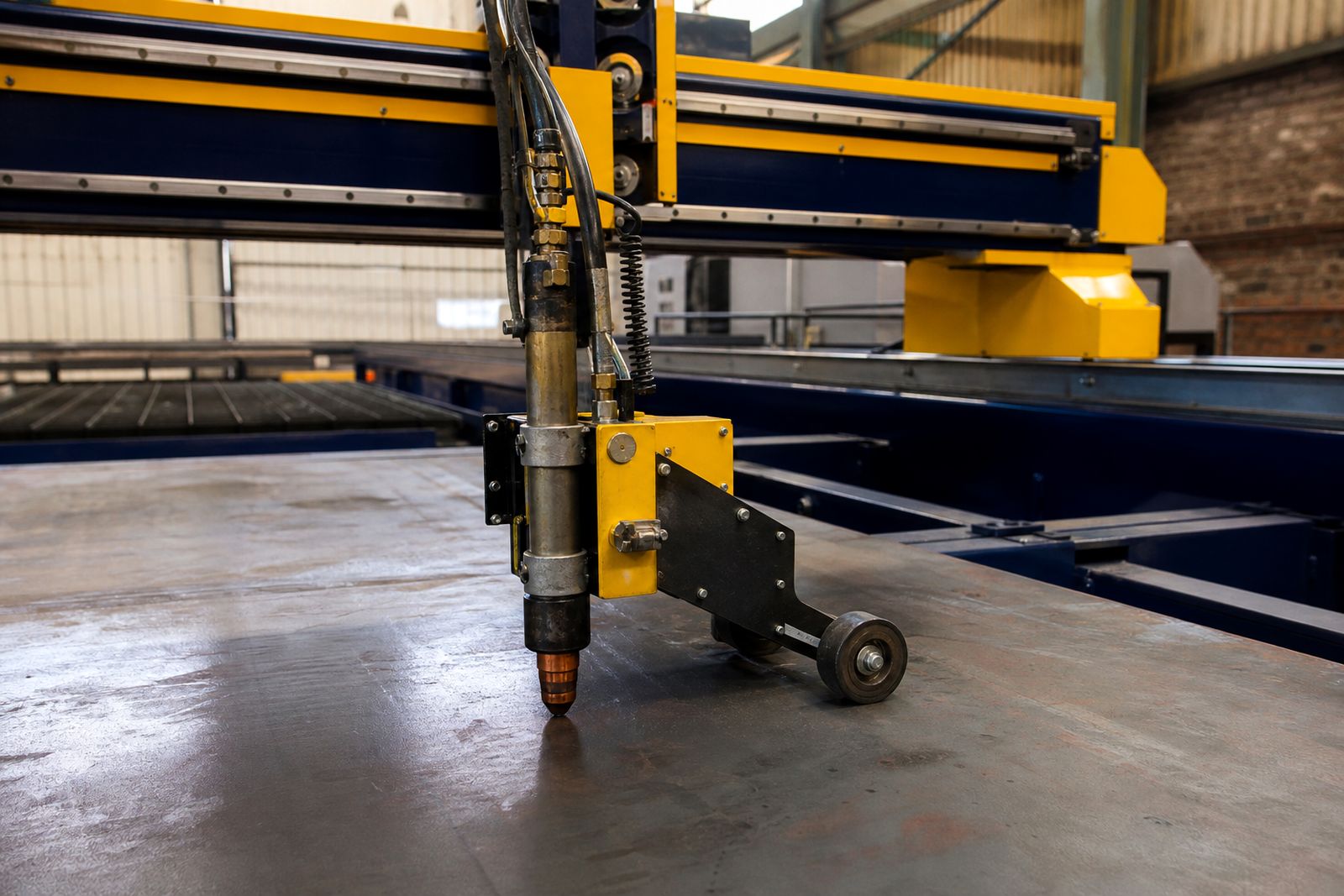
P-THC/ARC keeps the plasma torch at a working height by reading live arc voltage while the cut is running. It is a useful option where sheet is not perfectly flat, parts run for longer distances, or cut quality falls away when the torch drifts too high or too low.
What P-THC/ARC does during a cut
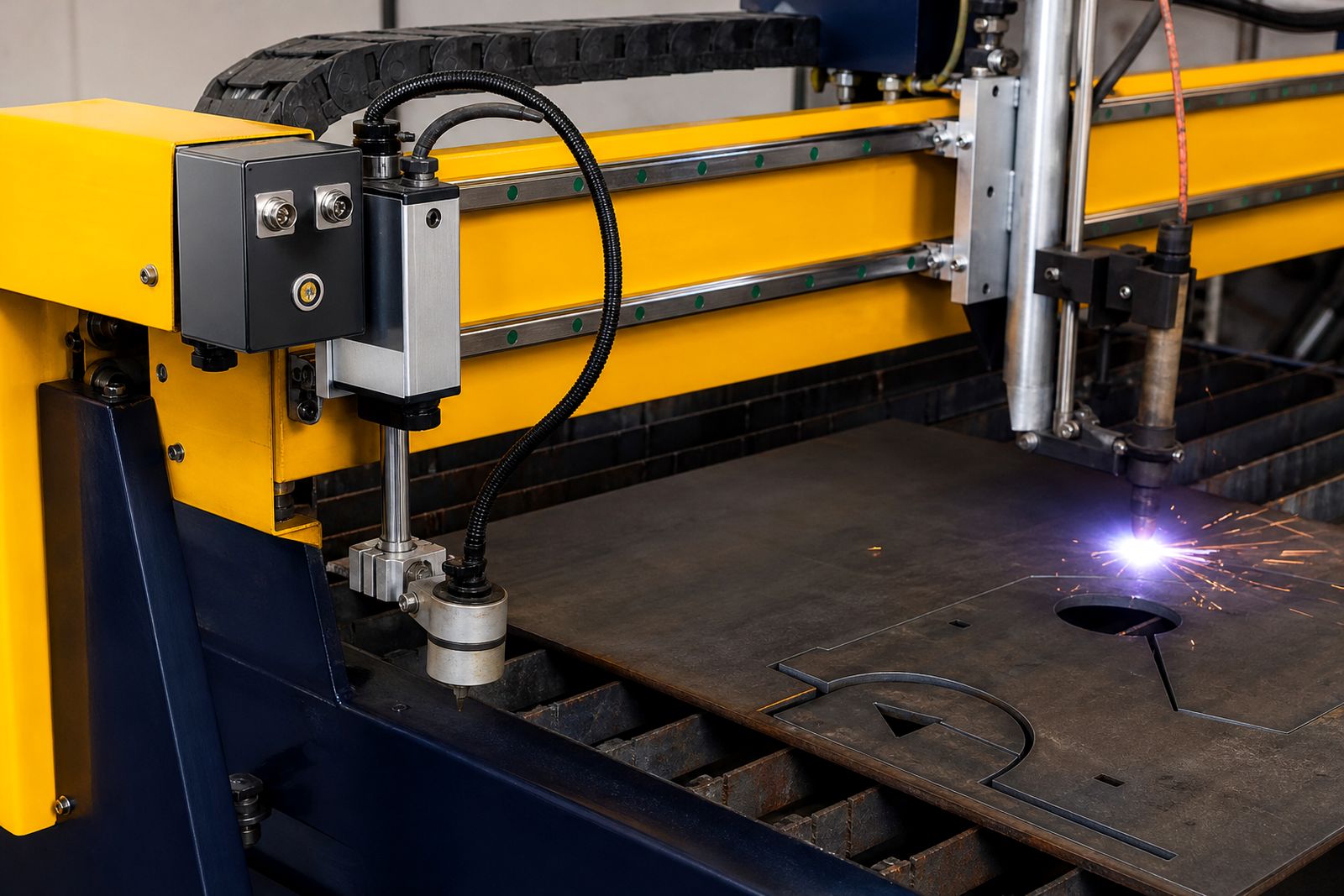
This option adds automatic torch-height correction based on live arc voltage. Once the pierce is complete and the machine moves into the cut, the height control compares actual arc voltage to the set value and nudges the Z axis up or down to keep the torch in the right band. On flatter sheet that movement can be small, but on plate with bow, oil-canning or heat pull it makes a visible difference.
It holds a usable stand-off over the full path so the arc stays stable and the nozzle is less likely to drag. On long nests that cross sheet areas with different flatness, this matters a lot more than it first seems.
- Works from live arc-voltage feedback while plasma cutting.
- Adjusts torch height during motion and at touch-off.
- Helps maintain stand-off on warped sheet and longer contours.
- Reduces the chance of torch contact where plate lifts unexpectedly.
When it is worth paying for
P-THC/ARC earns its place when the machine will spend real time on mild steel sheet and plate that is not consistently flat. Fabrication shops cutting gate parts, brackets, base plates, gussets and repeated production nests usually feel the benefit first. If your work is mostly short cuts on small blanks that are already flat and clamped well, mechanical height control may be enough.
It is also worth considering where consumable life and cut consistency matter from sheet to sheet. A torch running slightly high can widen kerf and leave more dross. Too low and it risks collision. Arc-voltage control helps keep that middle position more stable, provided the cut data is set correctly.
- Useful for sheets with bow, camber or local high spots.
- Useful where nests include long straight runs or large profiles.
- Useful for repeated production where cut height needs to stay consistent.
- Usually less critical for very short parts on flat material.
How it is fitted on our machines
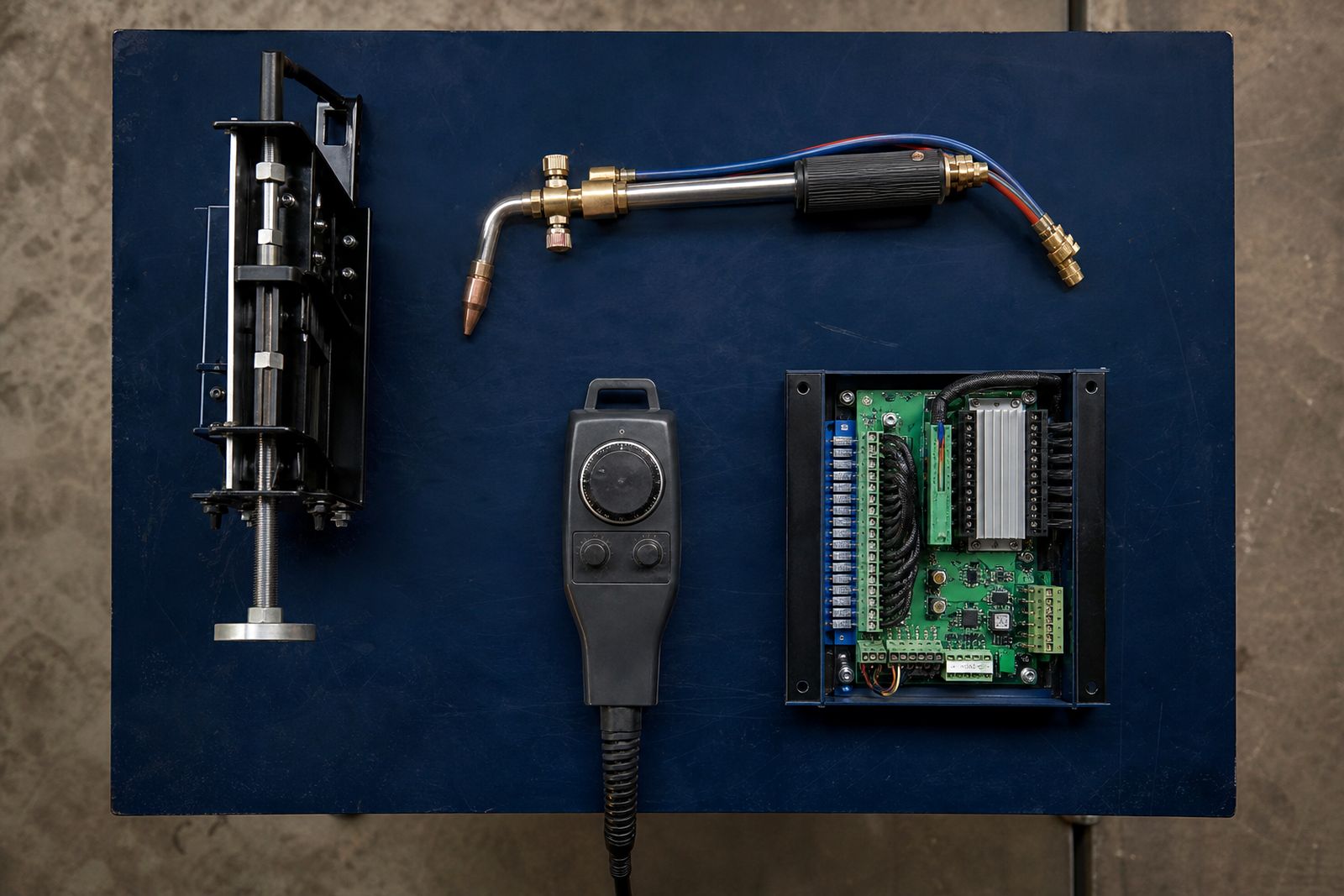
On a CNC Plasma Machine build, P-THC/ARC is configured as part of the control package and fully integrated with the machine. The option is tied into the Z-axis height movement, control boards and operator settings so the machine can switch from pierce height to cut height and then into live correction once the arc is stable. Wiring, grounding and signal routing matter here, because electrical noise can upset a voltage reading if the installation is sloppy.
During commissioning on the customer’s floor, the operator is shown where the arc-voltage setpoint sits in the cutting routine and when to leave the control active or pause it. We also check that the machine moves cleanly through the handover from pierce to cut. If the plate and process need it, small set-up changes are made there and then, with settings based on the actual cut.
Compatibility and option notes
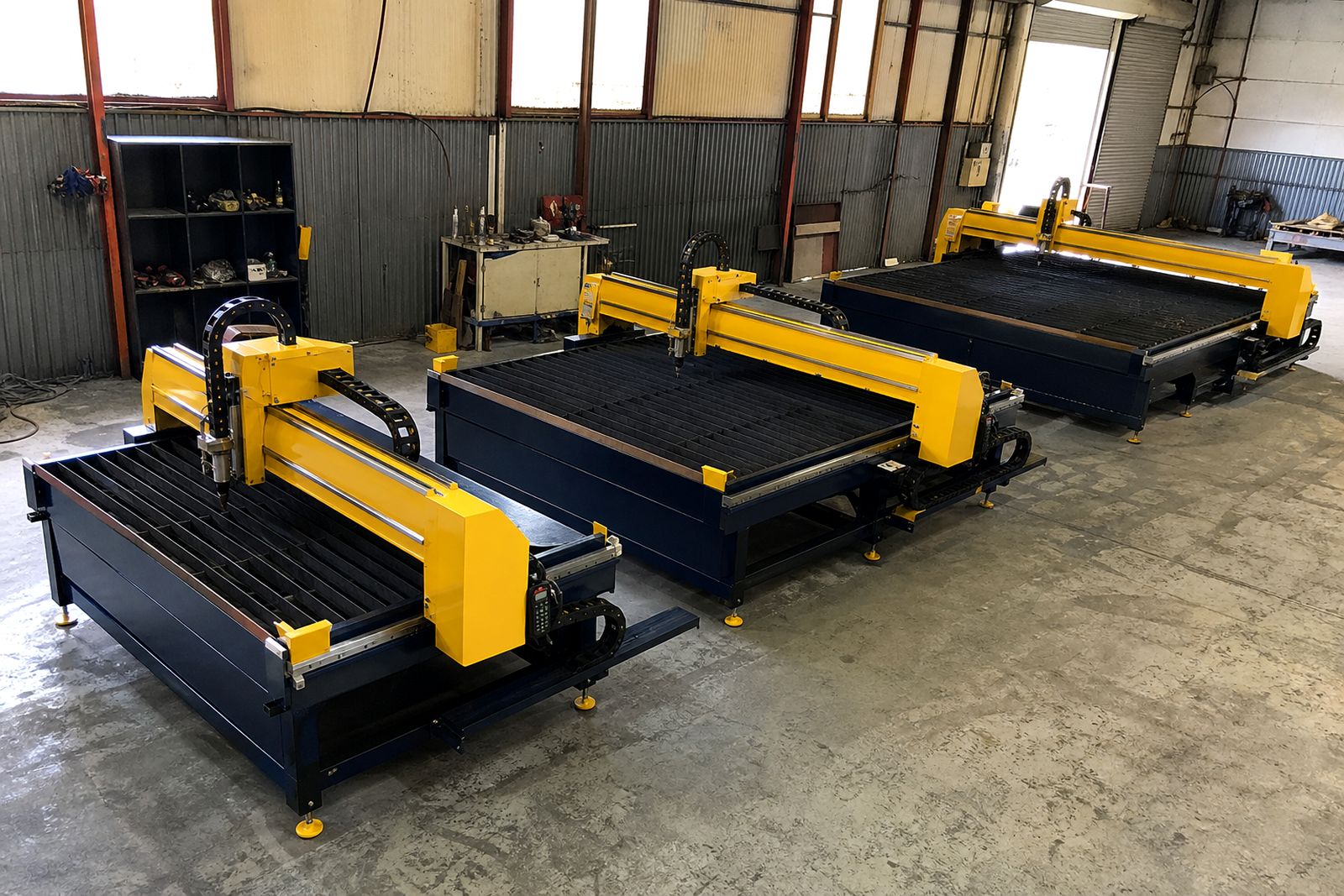
P-THC/ARC is for our standard-bed CNC plasma machines in 1.3 x 2.5 m, 1.5 x 3.0 m and 2.0 x 3.0 m sizes. It suits plasma cutting duties where live voltage feedback can be used to control height. If the machine is also specified with a flame-cutting torch, the arc-voltage height function applies to the plasma process and the oxy-fuel process uses its own set-up.
This option is commonly paired with the operator stand and the relevant control-board package. It can also sit alongside the remote pendant and bed dividers without conflict. The main point is that the machine must be ordered with the correct option code combination from the start, because the control layout and set-up procedure follow that build spec.
- Available on P-1325T, P-1530T and P-2030T builds.
- For plasma torch height correction during cutting.
- Build class stays standard-bed, with heavy 3 m plus gantry machines outside this option.
- Offered only on our own builds and not as a retrofit for other makes.
Set-up points that affect results
Arc-voltage control is helpful, but it cannot rescue poor cutting data. Cut speed, pierce delay, target cut height, consumable condition and material earthing all affect how reliable the voltage signal will be. If one of those is badly off, the torch may hunt or hold the wrong height. A lot of frustration comes from blaming the height control when the real fault sits in the process settings.
Shops near the coast should also pay attention to clean electrical connections and dry storage for consumables. Humidity and fine rust on contact points can introduce small inconsistencies that show up during thin-sheet work, and that can make the machine feel less settled than it should be.
Common mistakes with arc-voltage height control
The most common error is leaving the operator to treat voltage as a random quality knob. It is linked to actual stand-off, so large changes can move the torch well away from the intended cutting height. Another mistake is expecting the control to stay active through every stage of the path. On pierce, corners or very short features there are times when cut logic matters more than constant correction.
We also see jobs where plate is so poorly supported that the sheet moves under heat and air pressure. Height control can follow a degree of movement, but it cannot correct a bed or material handling problem by itself.
- Setting voltage without matching it to the cut data.
- Using worn consumables and then chasing the symptom in software.
- Expecting live control to fix bad sheet support or weak earthing.
- Running very short cuts where there is barely time for stable correction.
What our CNC Plasma Machine customers say
Verified Google reviews
Questions we get asked
Is P-THC/ARC better than mechanical height control on every job?
It usually shows its value on uneven sheet, longer profiles and repeated production work where live correction keeps the stand-off more consistent. On simple short cuts on flat material, mechanical height control may be enough.
Can this option be added to another make of machine?
We configure it on our own standard-bed machines as part of the build specification and do not retrofit other makes.
Does arc-voltage control work while flame cutting?
The arc-voltage function is for plasma cutting. If a machine is fitted with a flame torch as well, that process uses its own set-up and not live arc-voltage feedback.
Also worth a look
Tell us about the job
Send sizes, materials and where you are through our contact form, and we will come back with the practical options.
Open the contact form