P-THC torch-height control
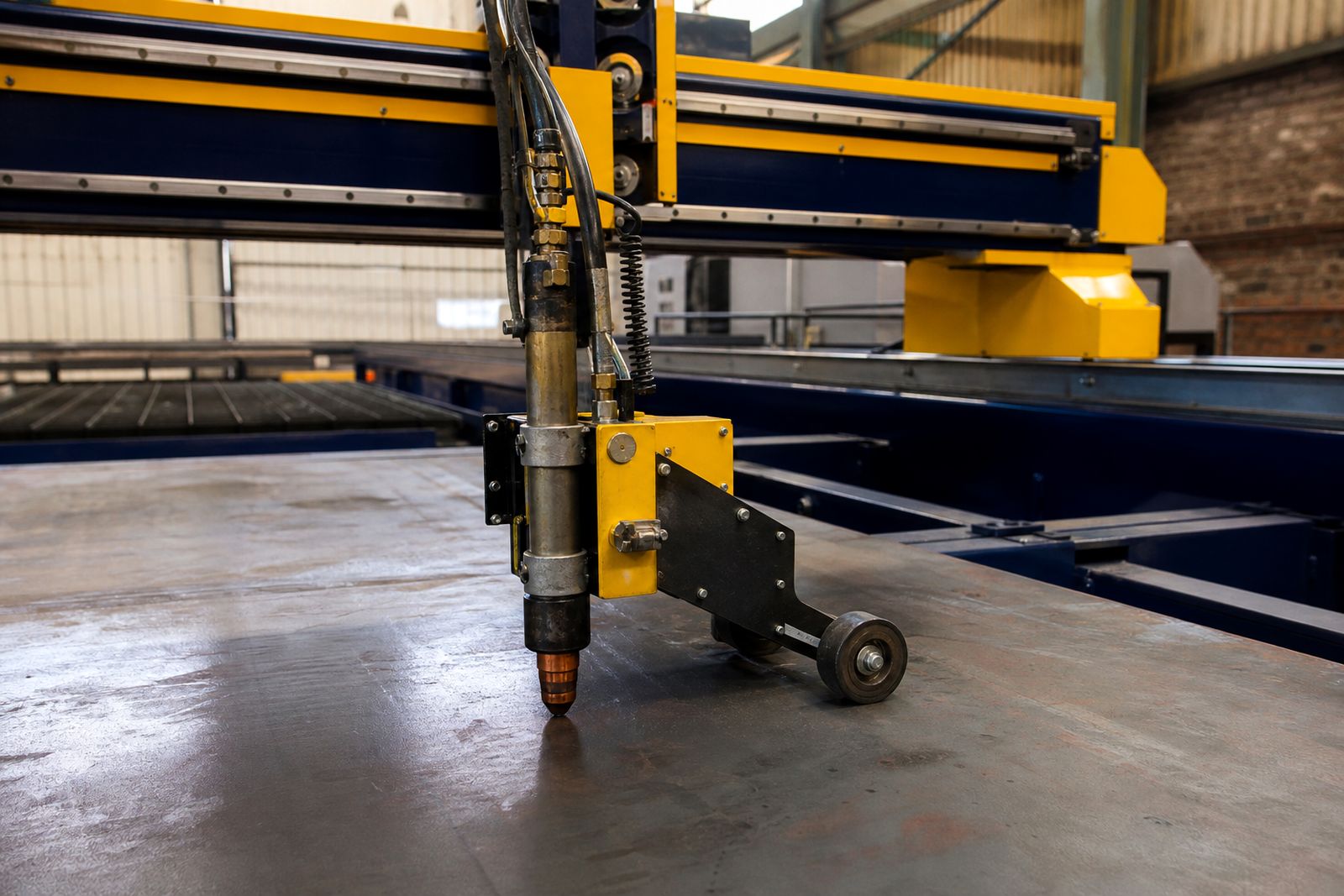
P-THC keeps the torch at a workable cutting height as the sheet heats, lifts or varies slightly across the bed. On our standard-bed machines this option is specified up front, then fitted and set on the machine before floor commissioning.
What P-THC does during a cut
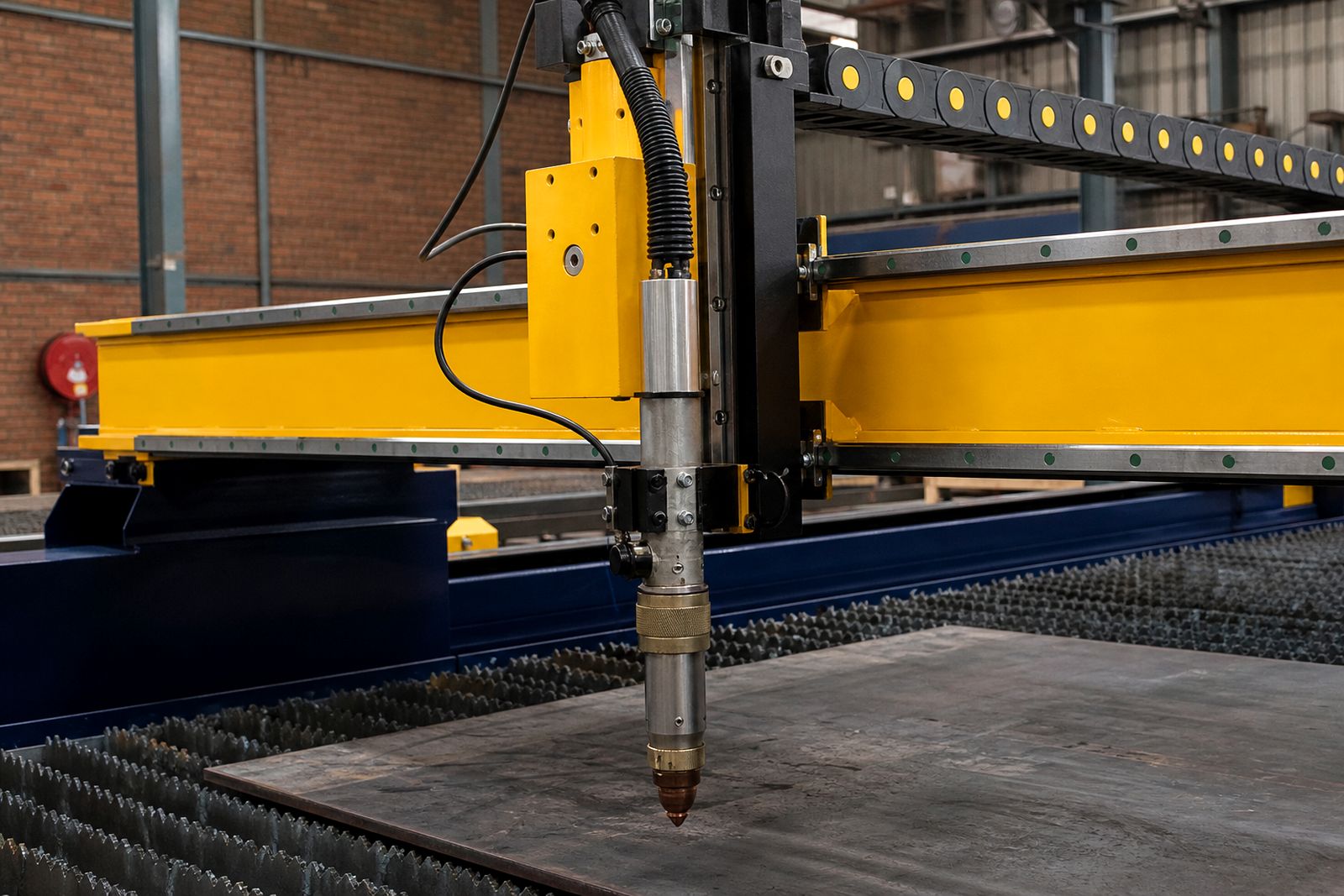
Without height control, the torch runs at one preset level and any plate movement has to be absorbed by wider tolerances. P-THC adds active height management so the machine can hold a steadier torch-to-plate gap while cutting. That matters on larger sheets, warmer plate and jobs where piercing and cut height are not the same.
The system works in two stages. First, the machine finds a reference height before piercing. Then it shifts to cut height and holds that height by the selected method while the gantry travels. On lighter material this helps avoid tip strikes and on longer nests it keeps cut quality more consistent edge to edge.
- Helps maintain pierce height and cut height separately.
- Reduces the chance of torch contact when plate lifts in the heat.
- Supports cleaner cutting on jobs with long run times or repeated parts.
- Makes the machine less dependent on one perfectly flat sheet.
Arc-voltage or mechanical: which plate suits which method
We offer two P-THC routes: arc-voltage control and mechanical height control. Arc-voltage control reads the cutting arc and adjusts torch height from that signal. Mechanical control relies on a physical sensing method. It is usually chosen for more straightforward work. It also suits a narrower material range or a tighter budget.
Arc-voltage control is normally worth paying for on mixed plate thicknesses, larger nests and jobs where heat distortion builds during longer cuts. Mechanical control can suit repeat work on known material where the operator wants a simpler arrangement. Both options still depend on sound material condition and sensible machine settings.
- Arc-voltage control: the better pick for shops that switch between 3 mm and 16 mm plate in one shift.
- Mechanical control suits simpler production patterns and stable material.
- Very thin, badly warped or heavily scaled plate still needs sensible cutting settings.
- The right choice depends on the plate you load most weeks.
When the option earns its place on the machine
Some buyers can manage with fixed height for very limited work, but many jobs in South African workshops need active control. Plate from the rack may have a slight crown, remnants are seldom perfect and heat build-up changes the job as the cut progresses. In those cases height control earns its keep by protecting the torch and keeping results more usable off the bed.
It is especially useful if you cut mild steel plate that varies from job to job, if you pierce often, or if you want fewer stoppages caused by lifted corners and local bowing. Shops near the coast also see more surface condition issues on stored material and that can affect how predictably a sheet behaves under heat, so the extra control is often money well spent.
How we fit and set it on our standard beds
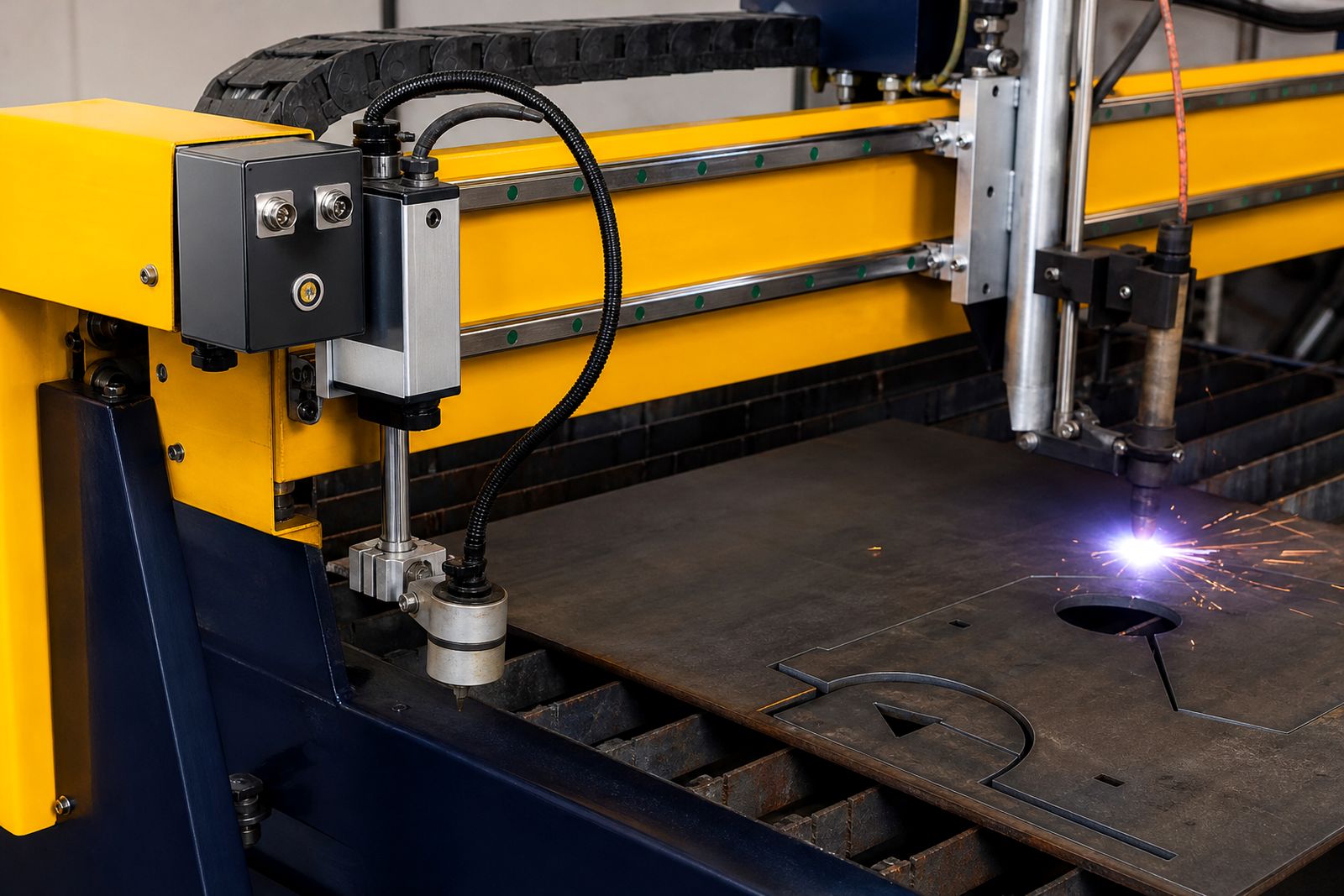
P-THC is integrated during the machine build and set up as part of the selected machine configuration. The torch assembly, sensing components, wiring and control settings are matched to the selected machine and option code. On site, the commissioning step includes checking reference movement, confirming the sensing cycle and setting practical cut-height behaviour with the operator present.
Because our machines are built in 1.3 x 2.5 m, 1.5 x 3.0 m and 2.0 x 3.0 m bed sizes, the setup is done around the travel and control package of that bed. The operator training covers how height control behaves at the start of a cut, how it responds during travel and when to leave settings alone. A lot of trouble starts when someone chases every rough edge with random changes. It usually makes the next sheet worse.
Compatibility notes before you specify it
P-THC is ordered as part of the machine configuration. It works alongside the control package and can be paired with options such as a remote pendant, bed dividers and the flame-cutting torch where the job mix calls for it. The exact method chosen under P-THC should match the cutting process and the way the machine will be used on the floor.
- Available on our 1.3 x 2.5 m, 1.5 x 3.0 m and 2.0 x 3.0 m standard-bed machines.
- Specified before build under the machine option code.
- Commissioned on the customer floor with operator training.
- Limited to our own standard-bed machines.
- Used on standard-bed machines instead of portable cutters or heavy 3 metre plus gantries.
If you are weighing up the difference between arc-voltage and mechanical control, put the real plate range and job type into our contact form so the machine can be quoted properly from the start.
Common mistakes that cause poor height behaviour
The most common problem is blaming height control for issues caused elsewhere. Worn consumables, poor earthing, damp air, scaled plate and rushed pierce settings can all show up as bad height performance when the root cause is different. Another frequent mistake is using one setting for thin sheet on heavier plate and expecting the machine to sort it out.
- Running old consumables past their useful life.
- Ignoring plate rust, scale or heavy paint at the cut line.
- Changing cut height, pierce delay and speed all at once.
- Assuming the sensor can correct severe plate deformation.
- Skipping floor-level checks after the machine has been moved.
Good height control still depends on a sound machine setup and sensible cutting data. When those are in place the option does its job quietly and the operator spends less time recovering from torch knocks and failed starts.
What our CNC Plasma Machine customers say
Verified Google reviews
Questions we get asked
Do I need torch-height control on every machine?
For very limited work with flat, consistent material, fixed height may be workable. Most shops cutting mixed plate benefit from height control because real sheets move under heat and are seldom perfectly flat.
Is arc-voltage control always better than mechanical control?
Arc-voltage control is often the better fit for mixed material ranges and longer production cuts, while mechanical control can suit simpler repeating work. The better choice depends on the plate, process and budget.
Can P-THC be added later to another machine I already own?
P-THC is specified and fitted on our own standard-bed machines during the build. We do not retrofit other makes.
Tell us about the job
Send sizes, materials and where you are through our contact form, and we will come back with the practical options.
Open the contact form